
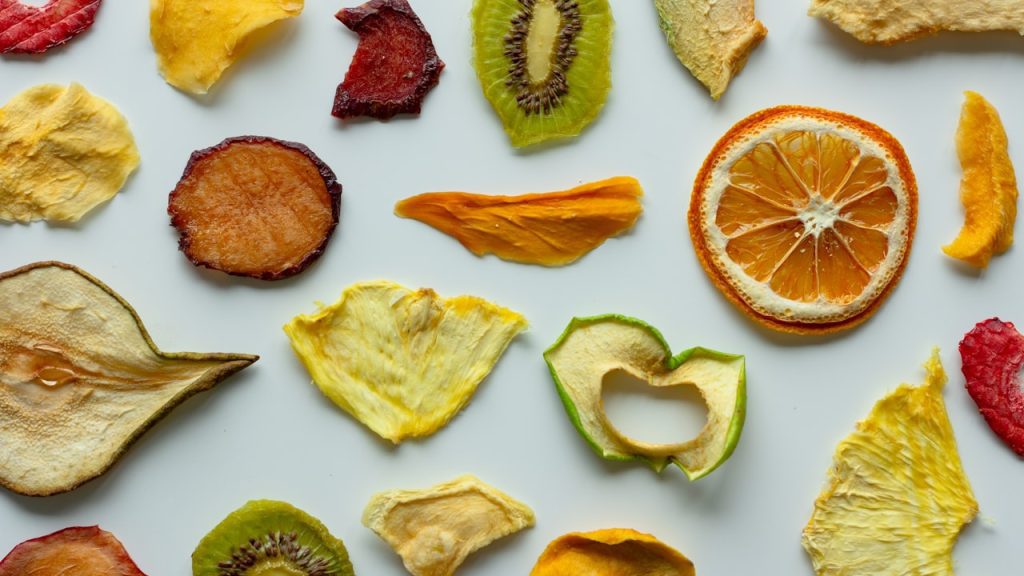
Crunch Formulas: Toppings, Snack Mixes and Kid-Made Treats
Crunchy freeze-dried fruit is a topping first and a snack second. Used the right way, it adds texture to foods that are otherwise soft: yogurt, ice cream, oatmeal, pudding, and frosting. This section gives you ratios, timing rules, and kid-friendly recipes instead of general ideas.
The one rule: add the crunch last
Freeze-dried fruit pulls water out of whatever it touches. The wetter the food, the faster it goes soft. Treat the fruit like croutons on a salad and add it right before eating.
| Topping on... | What to expect | Tip |
|---|---|---|
| Ice cream | Stays crisp for several minutes | Crush coarsely; add just before serving |
| Cereal with milk | Softens fairly quickly | Sprinkle on top at the table |
| Plain yogurt | Crisp briefly, then chewy | Serve in a separate cup if packing a lunch |
| Oatmeal | Softens right away | Stir in for fruit flavor, or hold some back as a topper |
| Frosting or whipped cream | Stays crisp longest at first, then softens | Decorate just before serving |
These are general expectations. Humidity, temperature, and the fruit you choose all change the timing.
Yogurt toppings and bark
- Parfait cups: layer yogurt, granola, and fruit. Keep the fruit on top.
- Yogurt bark: spread thick yogurt on a parchment-lined tray, sprinkle with berries and a few chocolate chips, freeze until firm, and break into pieces. Serve right from the freezer.
- Dip duo: serve crisp fruit alongside a small cup of yogurt and let kids dip.
Cereal and breakfast ideas
- Strawberry and banana slices over plain puffed or corn cereal.
- Apple pieces with cinnamon on oatmeal.
- A jar of "cereal booster" made with crushed fruit and a few nuts, kept on the counter.
Trail mix formula (parts, not exact measures)
Use a scoop as your unit and mix by parts:
- 2 parts cereal or pretzels, for bulk.
- 1 part nuts or seeds, for staying power.
- 1 part freeze-dried fruit, for sweetness and color.
- Half a part chocolate chips or yogurt chips, for a treat.
Store in an airtight jar. Because the fruit is the most moisture-sensitive ingredient, add it just before packing for a trip and avoid mixing it with soft, chewy dried fruits in the same bag, which can transfer moisture. For a school-safe version, skip nuts and use seeds or extra cereal.
Savory crunch mixes
Not every snack mix has to be sweet. Freeze-dried corn and peas are crunchy, mild, and surprisingly good with seasoning. Toss with pretzels, roasted chickpeas, and a pinch of salt, smoked paprika, or ranch seasoning. Add a tiny amount of olive oil to help the seasoning stick. Browse freeze-dried vegetables to find pieces that are small enough to snack on.
Dessert and ice cream ideas
- Sundae bar: set out ice cream with bowls of crushed strawberries, banana chips, mango pieces, mini chocolate chips, and sprinkles.
- Berry crunch crumble topping: mix crushed fruit with crushed graham crackers or cookies and sprinkle over ice cream or pudding.
- Cheesecake cups: layer cream cheese filling, crumbs, and fruit.
- Chocolate-dipped fruit: dip slices or whole pieces in melted chocolate and let them set on parchment. A parent should handle the hot chocolate.
- Cupcake decorating: press fruit onto frosting just before serving.
More dessert-style options are on the desserts page.
Kid-made recipes (adult helps with heat and knives)
- Rainbow snack cups. Fill a small cup with layers of different colored fruits. Kids can match colors for a rainbow.
- Fruit dust popcorn. Grind fruit into powder, toss over lightly buttered popcorn, and add a pinch of salt. Skip this one for toddlers, since popcorn is a choking hazard for the youngest children.
- No-bake cereal bars. An adult melts marshmallows with butter. Stir in cereal and crushed fruit, press into a pan, and let it cool.
- Fruit pizza. Spread cream cheese or yogurt on a graham cracker or round cookie and decorate with fruit.
- Smoothie sprinkle. Blend a smoothie and let kids add crunchy fruit on top.
Always check allergens when kids bring treats to school. Chocolate, marshmallows, nuts, and cereal can carry allergens or shared-facility warnings.
Keeping the crunch between batches
- Open only what you will use this week.
- Reseal the original pouch each time and keep it away from steam and sunlight.
- Do not mix leftover crushed fruit into the main container.
- If a piece bends instead of snapping, treat it as moisture damage. Use it in smoothies or baking.
What to buy for these recipes
Strawberries, bananas, apples, and mango are the best all-rounders. Raspberries are lovely but fragile. Blueberries work well in mixes. Look through the snacks page, the fruit shop, or read our strawberry-specific ideas if berries are your favorite.
Can I bake the fruit on top of cookies or muffins?
You can, but expect it to soften and darken a little in the oven. For the best crunch, bake the item plain, let it cool, and press the fruit onto the frosting or glaze afterward.
Why did my fruit go chewy in the mix?
Most often it picked up moisture from another ingredient or from the air. Keep sticky dried fruits, marshmallows, and chocolate that has started to melt away from the crisp pieces, and store the mix in an airtight jar.
How much topping is enough?
Start with a tablespoon or two per bowl of yogurt or ice cream. The flavor is concentrated, so a little goes a long way, and you can always add more.