From quick weeknight soups to a 25-year emergency pantry, we ranked the freeze-dried vegetables actually worth stocking — and which ones to skip.
By Thrive Freeze EditorsUpdated May 1, 20267 min read
Why Freeze-Dried Vegetables Make Sense
Fresh vegetables are wonderful — until they wilt. Frozen ones occupy half your freezer for the privilege of mushy texture. Canned vegetables are convenient but sodium-heavy and lose most of their nutritional punch in the canning bath.
Freeze-dried vegetables solve every one of those problems. The freeze-drying process removes about 98% of a vegetable’s water content while preserving structure, color, flavor, and nearly all of the nutrients. What you’re left with is a crisp, lightweight ingredient that rehydrates in five minutes in soup, holds its shape in a slow cooker, and lives in your pantry for 25 to 30 years.
For 2026, the freeze-dried vegetable category has matured into a real pantry staple — not just an emergency-prep curiosity. The packaging is better, the prices have come down, and the variety is broader than it has ever been.
How We Picked These Vegetables
We evaluated every vegetable in the Ready Harvest line at Thrive Freeze, plus equivalent fresh and dehydrated alternatives for context. Each was scored on:
Single-ingredient purity — just the vegetable, no salt or maltodextrin filler
Rehydration quality — texture, flavor, and shape after 5–10 minutes in water
Packaging — mylar with oxygen absorber, resealable lid, intact seal verification
Shelf life — verified manufacturer rating, ideally 25+ years
Price per usable cup — calculated after rehydration, not by dry weight (since 1 cup dry equals roughly 4 cups rehydrated)
One #10 can of Ready Harvest vegetables holds the equivalent of two grocery-bags-worth of fresh produce — at a fraction of the weight.
The Top Freeze-Dried Vegetables
Best Overall Lineup
Ready Harvest at Thrive Freeze
20+ SKUs · $27.99–$54.97 / can · 30-yr shelf
The widest single-brand vegetable selection we’ve tested, all at consistent quality. Single-ingredient, mylar-canned, oxygen-absorber sealed. Highlights: green beans ($28.99), broccoli ($32.99), sweet corn ($27.99), garlic ($54.97).
If you want to seed a pantry in one purchase rather than ordering individual cans, the Variety Pack is the cleanest path. Mixed selection of the most-used Ready Harvest vegetables.
~6.6 oz pantry can or #10 · from $27.99 · 30-yr shelf
If you only buy one freeze-dried vegetable, make it sweet corn. It rehydrates in under 5 minutes, holds shape in soups and chili, and delivers more usable meals per dollar than almost anything else in the category.
Best Flavor Booster
Ready Harvest Garlic & Onions
Garlic $54.97 · Onions $28.99 · 25-30-yr shelf
Garlic and onions are the difference between a passable meal and a great one — and freeze-dried versions deliver fresh-clove flavor without the storage headaches. Worth keeping cans of both at the ready.
Side-by-Side Comparison
Vegetable
Price
Rehydrate Time
Best For
Shelf Life
Sweet Corn
$27.99
3-5 min
Soups, chili, side dishes
30 years
Green Beans
$28.99
5-7 min
Casseroles, stir-fry
30 years
Broccoli
$32.99
5-7 min
Stir-fry, soups, mac & cheese
30 years
Cauliflower
$27.99
5-7 min
Curries, roasted dishes
30 years
Onions
$28.99
2-3 min
Almost everything
30 years
Garlic
$54.97
1-2 min
Sauces, marinades, dressings
25 years
Asparagus
$44.97
5-7 min
Pasta, risotto, side dishes
30 years
Garden Peas
$44.97
3-5 min
Soups, fried rice, sides
30 years
Prices verified from Thrive Freeze May 2026. Pack sizes vary; click through for current pricing on each.
10 Ways to Use Freeze-Dried Vegetables
🥣
Quick soups
Toss a handful into broth — they rehydrate in 5 minutes, faster than chopping fresh.
🍛
Slow cooker meals
Add directly to the pot at the start. They absorb flavor as they rehydrate.
🍝
Pasta sauces
Crush dried garlic and onions straight into simmering sauce — better than powdered.
🥘
Stir fry & rice bowls
Soak in hot water 5 min, then sauté. Texture holds up to high heat.
🥗
Soup & salad mixes
Build your own dry soup mixes for camping or backpacking trips.
🍕
Pizza topping
Sprinkle dried bell peppers, onions, mushrooms straight onto pizza dough.
🥧
Pot pies & casseroles
Mix into the filling without pre-cooking — they soften in the oven.
🌮
Tacos & burritos
Hydrate with hot taco-seasoned water for instant fajita filling.
🥬
Smoothies & juices
Spinach and kale powder right into the blender — full nutrient hit.
🥫
Emergency pantry
The 25-30 year shelf life means it’s still good when canned vegetables expire.
What to Look For When Buying
Single-Ingredient Cans
The label should list one ingredient: the vegetable. If you see “vegetable, salt” or any preservative, you’re paying for filler the freeze-drying process should make unnecessary. Ready Harvest’s entire line is single-ingredient, which is one of the main reasons we recommend it as the default.
Mylar with Oxygen Absorbers
This is the difference between a 25-30 year shelf life and a 1-2 year one. Mylar is opaque to oxygen and UV; the oxygen absorber pulls trapped O2 out of the can post-sealing. Together, they make freeze-dried vegetables effectively shelf-stable indefinitely if the can stays sealed.
Resealable #10 Can
Once you open a can, oxygen starts the slow degradation. A reseal-friendly metal #10 can with a snap-on plastic lid lets you use a portion and store the rest with minimal air exposure. After opening, plan to use the contents within 6-12 months for peak quality.
Real Per-Cup Math
The big honest comparison is price per rehydrated cup, not per ounce of dry product. Most freeze-dried vegetables expand 3-4x when rehydrated. A $30 can with 2 cups of dry product yields 6-8 cups of usable vegetable — that’s around $4 per finished cup, comparable to fresh produce for a fraction of the storage hassle.
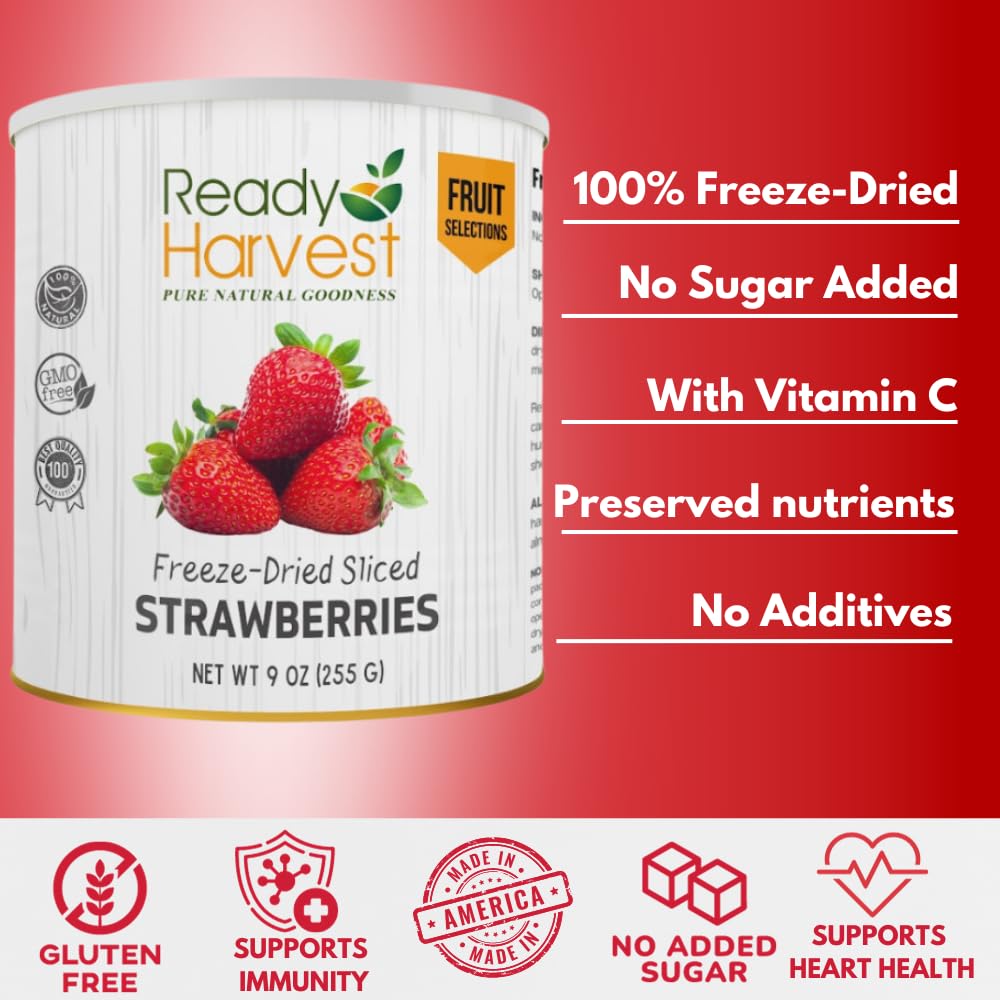
Single-ingredient, no added sugar, vitamin-preserved — what we look for in any freeze-dried product we recommend.
Storage and Rehydration
Sealed mylar cans stored at room temperature (under 75°F, low humidity) will last 25-30 years. The freeze-drying process is so effective at removing water that bacterial growth has nothing to feed on.
Once opened, transfer any unused portion to an airtight container with a fresh oxygen absorber, or close the lid tight and consume within 6-12 months. The enemies are heat, light, and moisture — keep cans out of attics, garages, and direct sun.
How to Rehydrate
Most vegetables rehydrate in 5-10 minutes by submerging in cold water, hot water, or directly in the broth/sauce of whatever you’re cooking. For soups and stews, you don’t need to rehydrate separately — they absorb their water as the dish cooks. For salads or stir-fry, soak briefly in hot water first, then drain and use.
Frequently Asked Questions
Are freeze-dried vegetables nutritious?
Yes — the freeze-drying process retains 90%+ of the original vitamins, minerals, and fiber, far more than canning or dehydrating. Vitamin C and B vitamins survive freeze-drying particularly well. The exception is some heat-sensitive enzymes, which are reduced regardless of preservation method.
How long do freeze-dried vegetables last?
Sealed mylar cans with oxygen absorbers last 25-30 years at room temperature. Once opened, plan on 6-12 months for peak quality if resealed properly.
Do you need to rehydrate freeze-dried vegetables before cooking?
Not always. For soups, stews, and slow-cooker meals, just toss them in dry — they rehydrate in the existing liquid. For salads, stir-fry, or eaten-as-is uses, soak in cold or hot water for 5-10 minutes first.
Are freeze-dried vegetables better than dehydrated?
Freeze-drying preserves more nutrients, structure, and flavor than dehydrating, which uses heat. Dehydrated vegetables are typically chewier, more concentrated in flavor, and shorter shelf life — they’re cheaper but a meaningful step down in quality.
What freeze-dried vegetables should I buy first?
Start with sweet corn, onions, and broccoli — they’re the most versatile across soups, stir-fries, and casseroles. Add garlic next for flavor, then expand based on your cooking patterns. The Veggie Variety Pack is a clean way to seed a pantry with multiple vegetables in one order.
The Bottom Line
For most home pantries in 2026, Ready Harvest at Thrive Freeze is the easiest answer — 20+ vegetable SKUs, single-ingredient, 30-year shelf life, and consistent quality across the line. Start with three or four cans of the vegetables you cook with most (sweet corn, onions, broccoli, garlic) and expand from there.
If you want a one-shot way to seed a complete pantry, the Veggie Variety Pack is the cleanest path. Either way, you’re trading a few weeks of grocery shopping for 30 years of pantry stability — and the cooking quality, in our testing, is genuinely better than most fresh vegetables that have already sat in a fridge for a week.
Stock your vegetable pantry today
Browse Ready Harvest’s full vegetable lineup at Thrive Freeze — single-ingredient, 30-year shelf life, all in resealable #10 cans.
{
“@context”:”https://schema.org”,
“@graph”:[
{
“@type”:”Article”,
“headline”:”Best Freeze-Dried Vegetables in 2026: A Buyer’s Guide”,
“description”:”Buyer’s guide to freeze-dried vegetables in 2026. We compare 20+ SKUs from Ready Harvest at Thrive Freeze, plus uses, storage, and how to build a 30-year pantry.”,
“author”:{“@type”:”Organization”,”name”:”Thrive Freeze”},
“publisher”:{“@type”:”Organization”,”name”:”Thrive Freeze”,”url”:”https://thrivefreeze.com”},
“datePublished”:”2026-05-01″,
“dateModified”:”2026-05-01″,
“image”:”/wp-content/uploads/2026/05/camping-meals-tent-glow.jpg”,
“mainEntityOfPage”:{“@type”:”WebPage”,”@id”:”https://thrivefreeze.com/best-freeze-dried-vegetables-2026/”}
},
{
“@type”:”FAQPage”,
“mainEntity”:[
{“@type”:”Question”,”name”:”Are freeze-dried vegetables nutritious?”,”acceptedAnswer”:{“@type”:”Answer”,”text”:”Yes, freeze-drying retains 90%+ of vitamins, minerals, and fiber, far more than canning or dehydrating.”}},
{“@type”:”Question”,”name”:”How long do freeze-dried vegetables last?”,”acceptedAnswer”:{“@type”:”Answer”,”text”:”Sealed mylar cans last 25-30 years at room temperature. Once opened, 6-12 months for peak quality.”}},
{“@type”:”Question”,”name”:”Do you need to rehydrate freeze-dried vegetables before cooking?”,”acceptedAnswer”:{“@type”:”Answer”,”text”:”Not always. For soups and stews toss them in dry. For salads or stir-fry soak 5-10 minutes first.”}},
{“@type”:”Question”,”name”:”Are freeze-dried vegetables better than dehydrated?”,”acceptedAnswer”:{“@type”:”Answer”,”text”:”Freeze-drying preserves more nutrients, structure, and flavor than heat-based dehydration.”}},
{“@type”:”Question”,”name”:”What freeze-dried vegetables should I buy first?”,”acceptedAnswer”:{“@type”:”Answer”,”text”:”Start with sweet corn, onions, and broccoli, then add garlic. The Veggie Variety Pack seeds a complete pantry in one order.”}}
]
}
]
}