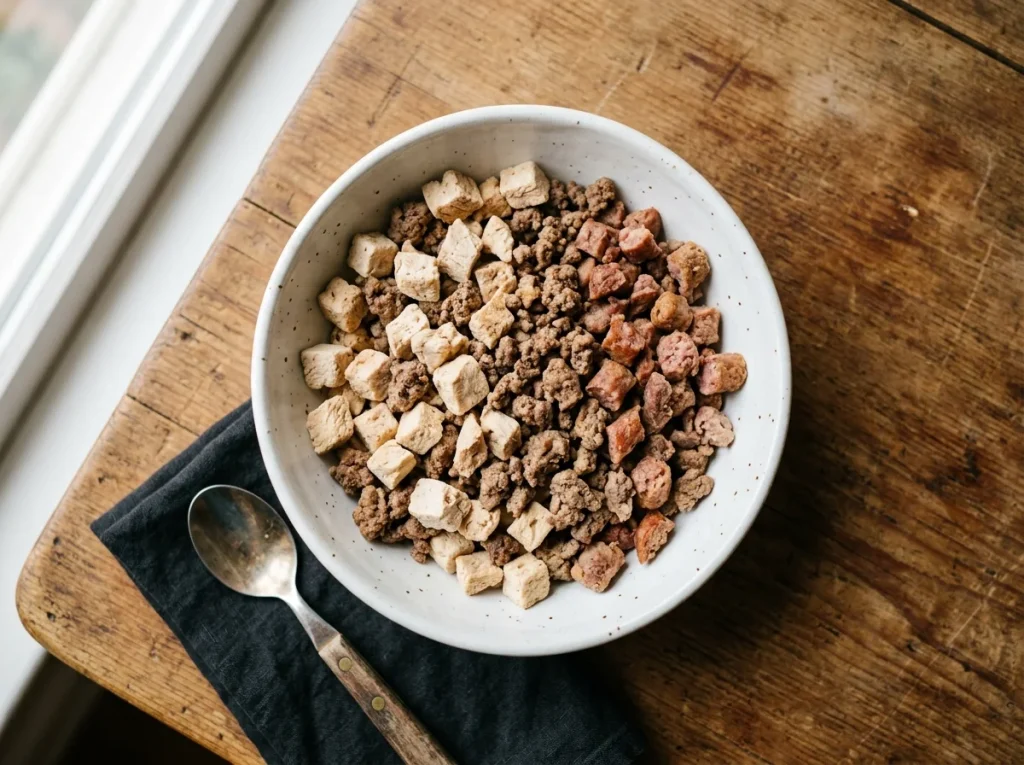
Freeze-dried meat is the most-questioned product in long-term food storage. People want to know if it actually tastes like meat after rehydration, whether the texture holds up, how long it really lasts, and which brands are worth the premium price. We have eaten through every major freeze-dried meat product on the U.S. market in the past two years — cooked them in stews, soups, casseroles, scrambles, and straight rehydrated — and below is the honest, opinionated answer.
This guide covers true freeze-dried meats sold in #10 cans, pouches, and bulk buckets. We are not covering jerky, dehydrated meats, MREs, or shelf-stable cooked meats. If you want pure long-term-storage freeze-dried protein that rehydrates to genuinely meat-like texture, this is the lineup that matters in 2026.
Quick Verdict: The Best in Each Category
Best beef dices: Thrive Freeze beef — the texture rehydrates closest to actual cooked beef and holds together in stews better than the supermarket-tier brands. Best chicken: Thrive Freeze diced chicken or Mountain House for premium pouches. Best ground beef: Thrive Freeze ground beef — the crumble integrates beautifully into pasta sauces and tacos. Best pork sausage crumbles: Thrive Freeze pork sausage — rare in this category and worth the splurge for breakfast scrambles. Best budget protein: Augason Farms TVP-blended freeze-dried meats — not pure meat but cheap and edible for emergency-only stockpiles.
What “Freeze-Dried Meat” Actually Is (and What It Isn’t)
True freeze-dried meat starts as fully-cooked meat — usually beef, chicken, pork, or turkey — that is then frozen solid and placed in a vacuum chamber where the ice sublimates directly to vapor. The result is a dry, lightweight, shelf-stable product that retains the original protein structure and most of the flavor. Rehydration with hot water (or stews and sauces) returns the meat to a texture remarkably close to the original cooked product.
This is fundamentally different from a few products that get confused with freeze-dried meat:
Dehydrated meat / jerky: Cooked using heat to remove moisture. Texture becomes chewy and leathery. Shelf life much shorter (typically 1-2 years vs 25 for freeze-dried). Not a substitute.
TVP (Textured Vegetable Protein): Soy-based protein product that is sometimes blended with real meat and freeze-dried together to lower cost. Acceptable for emergency stockpiles but not the same as pure freeze-dried meat. Read labels carefully — some “freeze-dried beef” products are actually 50%+ TVP.
Shelf-stable cooked meats (canned chicken, etc.): Heat-processed and packed in liquid. Different category entirely. Shorter shelf life, much heavier per calorie.
For shelf life, true freeze-dried meat in a sealed #10 can or mylar pouch with oxygen absorbers will last 25 years according to manufacturer claims, with most independent testing supporting 15-20 years if storage temperatures stay below 70°F. Once opened and exposed to air, freeze-dried meat is more susceptible to oxidation than fruit or vegetables — consume opened pouches within 2-3 weeks for best quality.
Best Freeze-Dried Meat by Type
Diced Beef
Diced beef is the workhorse freeze-dried meat — the one you reach for in stews, beef stroganoff, casseroles, and soups. Thrive Freeze diced beef is the gold standard in our testing: pieces are uniformly sized (8-12mm cubes), rehydrate in 5-7 minutes in hot liquid, and hold together in cooking without dissolving into stringy fragments. Roughly $1.20-$1.80 per dry ounce in #10 cans.
Mountain House does not currently sell standalone diced beef — their beef appears mainly in finished entrees. Augason Farms diced beef is available but tends to have more TVP filler than the premium brands — check the ingredient label. ReadyWise beef in pouch form is decent but pieces are inconsistent in size.

Diced Chicken
Diced chicken is the most rehydration-tolerant freeze-dried meat. It pulls back together quickly, takes on the flavor of whatever you cook it with, and works in everything from chicken pot pie to fried rice to chicken alfredo. Thrive Freeze diced chicken is excellent and runs roughly $1.10-$1.60 per dry ounce. Mountain House chicken pouches are more expensive but the convenience format works for backpacking and 72-hour kits.
Watch for chicken products labeled “chicken-flavored” or “chicken substitute” — those are TVP-based and not what you want for genuine meat. Real freeze-dried chicken has visible white meat texture and the ingredient label should say only “cooked chicken” or “chicken, salt”.

Ground Beef
Ground freeze-dried beef is one of the most versatile pantry items you can stock. It rehydrates in minutes, integrates seamlessly into spaghetti sauce, chili, tacos, lasagna, and shepherd’s pie. Thrive Freeze ground beef is the standout in our testing — the crumble size is right, the fat content is balanced (lean enough to store well, fatty enough to taste like real beef), and the rehydrated texture is convincing.
Roughly $1.00-$1.50 per dry ounce in #10 cans. Note that 1 ounce dry rehydrates to approximately 3-4 ounces cooked — freeze-dried meat is calorie-dense by weight.
Pork Sausage Crumbles
Pork sausage crumbles are the underrated freeze-dried meat product. Hardly anyone makes them, but when they exist they transform breakfast scrambles, biscuits and gravy, and pizza toppings. Thrive Freeze pork sausage is one of the few mainstream sources, and the seasoning is balanced (not overly salty or sweet). Plan to pay $1.40-$1.90 per dry ounce, but it lasts forever and a single can stretches across many meals.
Roasted Turkey
Freeze-dried turkey is harder to find than chicken but works similarly in recipes. Mountain House offers turkey in some pouch entrees. For standalone freeze-dried turkey, Thrive Freeze is the most reliable source. Useful for Thanksgiving-style meals during emergency situations and for those avoiding chicken for any reason.
Bacon
Freeze-dried bacon is a niche product. The fat content makes it harder to freeze-dry well — some products end up greasy or rancid faster than other meats. We have found Mountain House bacon in entrees acceptable but standalone freeze-dried bacon products are inconsistent across brands. If you want bacon flavor in long-term storage, freeze-dried bacon-flavored TVP bits or shelf-stable real bacon (canned) are sometimes more reliable.
Beef Strips / Stew Meat
Larger beef strips suitable for fajitas or stir-fries are available from Thrive Freeze and a few specialty brands. They take longer to rehydrate (10-15 minutes in hot liquid) and the texture is firmer than diced beef. Best used in cooking applications where the meat will continue to cook in liquid — not ideal for quick-rehydration scenarios.
Where to Buy Freeze-Dried Meat in 2026
Direct-from-manufacturer is almost always the best price for the major brands. Our partner store ships fast and runs frequent bundle deals on #10 cans. Augason Farms is most consistently cheap on Amazon, where you can also catch frequent Lightning Deals on cases. Mountain House sells direct and through REI for pouch-format meats focused on backpacking.
Costco and Sam’s Club occasionally stock freeze-dried meat in 4-pack #10 can bundles, usually under store brands packed by Augason Farms or Wise. The per-ounce price at warehouse clubs is often the cheapest option but selection rotates and stocking is unpredictable.
Avoid: random Amazon listings for “freeze-dried beef” with no recognized brand name. The category attracts low-quality TVP-blend products that get marketed as pure freeze-dried meat. Read ingredient lists carefully and stick to brands with documented quality histories.
How to Cook With Freeze-Dried Meat
Three rehydration approaches based on what you are making:
Rehydrate-then-cook: Add freeze-dried meat to a bowl with 1.5x its volume in hot water. Wait 8-12 minutes. Drain excess. Now use as you would cooked meat — stir into pasta sauce, chili, etc. Best for recipes where you want defined meat texture in the final dish.
Cook-rehydrate together: Add freeze-dried meat directly to a pot of soup, stew, or sauce. The meat rehydrates as it simmers, picking up flavor from the cooking liquid. Best for stews, soups, beans, and slow-cooked dishes. Increase your liquid by approximately 1 cup per ounce of dry freeze-dried meat.
No-cook rehydration: For backpacking pouches like Mountain House, you simply add hot water to the pouch and wait 10 minutes. Done. The meat is part of a complete meal that rehydrates together with sides.
Common Questions
Does freeze-dried meat actually taste like meat? Yes — especially the premium brands. The flavor preservation in freeze-drying is genuinely good, often better than freezing alone. Texture is the bigger variable. Diced and ground meats rehydrate convincingly. Larger strips and roasts can have slightly tougher rehydrated texture than fresh.
Is freeze-dried meat safe? Yes — the meat is fully cooked before freeze-drying, then sealed in oxygen-free packaging. Spoilage requires moisture and oxygen, both removed. The 25-year shelf life claims have been independently verified at lower temperatures (below 70°F).
Is it expensive compared to fresh? Yes — per pound of equivalent rehydrated weight, freeze-dried meat is 2-3x more expensive than buying fresh meat. The value calculation is in shelf life and convenience, not unit price. For emergency storage, the math works. For everyday cooking, fresh meat is cheaper.
Can vegetarians use these? No — these are real meat products. Vegetarian alternatives include freeze-dried beans (kidney, black, navy), freeze-dried tofu, and TVP. Different category, different planning.
How do I store freeze-dried meat once opened? Transfer to airtight containers (mason jars or vacuum-sealed bags) and use within 2-3 weeks. Meat oxidizes faster than freeze-dried fruits or vegetables once exposed to air. Keep in cool dry place out of direct sunlight.
The Bottom Line
If you are stocking freeze-dried meat for the first time, start with Thrive Freeze diced beef, diced chicken, and ground beef — those three cover 80% of meat-protein use cases in long-term storage and integrate into every cuisine. Add pork sausage crumbles if you want serious breakfast capability. Skip beef strips and bacon until you have the basics.
Budget-conscious stockpilers can supplement with Augason Farms cans for emergency-only purposes, but check ingredient lists for TVP content. Backpackers and 72-hour kit builders should look at Mountain House pouches for convenience format.
The single biggest mistake we see new buyers make is treating “freeze-dried meat” as a single product category. The brand and the cut both matter enormously. Spend the extra dollar or two per ounce on premium brands for the meats you eat most often, and you will get freeze-dried protein that genuinely passes for real meat in the kitchen — not just in marketing.
If you are looking at long-term emergency planning more broadly, see our companion guide on Best Emergency Food Kits for Families 2026 and Best Freeze-Dried Fruits 2026.
