
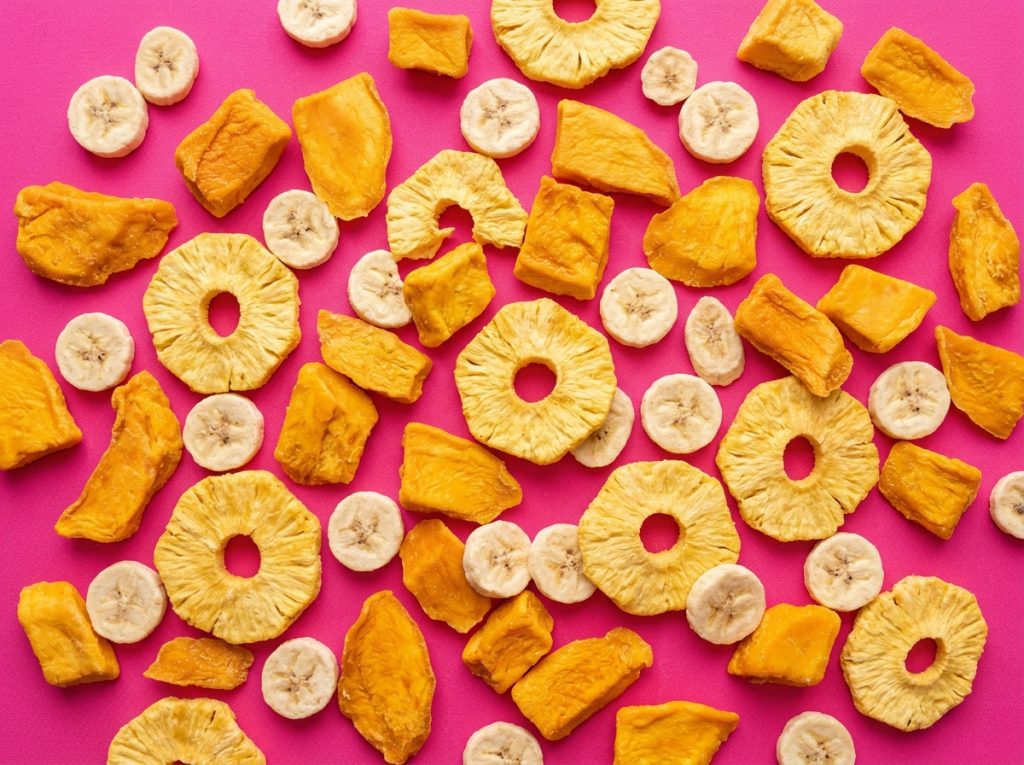
One question comes up more than any other about freeze-dried food: does it actually keep its nutrition, or are you just storing pretty-looking calories? The honest, well-supported answer is that freeze-drying is one of the gentlest preservation methods there is — and it retains most of the food’s nutrients and flavor. Here’s why, and what to realistically expect.
The science of a gentle process
Freeze-drying works by sublimation: food is frozen, then placed under vacuum where its ice converts directly to vapor without melting. The result is the removal of roughly 98-99% of moisture — and, crucially, it happens at low temperatures.
That low-heat profile is the whole story when it comes to nutrition. Many nutrients, especially certain vitamins and delicate compounds, are sensitive to heat. The hotter and longer you cook or dry a food, the more of those fragile elements break down.
Why low temperature matters: freeze-drying vs. heat drying
Traditional dehydrating uses sustained warm air to evaporate water. It works, but the prolonged heat is harder on heat-sensitive nutrients and tends to change texture and flavor more dramatically. Freeze-drying sidesteps the high heat entirely.
| Method | Heat level | Moisture removed | Effect on nutrients & flavor |
|---|---|---|---|
| Freeze-drying | Low | ~98-99% | Retains most nutrients and flavor |
| Dehydrating | Moderate-high, prolonged | ~80-95% | More change to heat-sensitive nutrients, texture, flavor |
| Canning | High | None (water remains) | Cooking heat affects some nutrients; shorter shelf life |
Because the food is never cooked dry, a freeze-dried strawberry keeps the shape, color, and much of the character of the fresh fruit. Rehydrate it, and it returns close to where it started.
What you can realistically expect
It’s important to be measured here. No preservation method is perfectly lossless — some change is unavoidable the moment any food is harvested and processed. What freeze-drying offers is a process that minimizes that change compared with high-heat methods. In plain terms:
- You retain most of the food’s nutrients and flavor.
- The original taste and texture come through far more faithfully than with heat drying.
- Dry fruit eaten as a snack delivers concentrated flavor with the water simply removed.
We deliberately avoid quoting precise retention percentages, because real numbers vary by food, harvest, and handling. The reliable, honest claim is the one worth remembering: it retains most of its nutrients and flavor.
Build Your Freeze-Dried Pantry
Hand-picked categories for this guide — sealed for 20–30 years, ready when you are.
What happens to nutrition over time in storage
Once food is freeze-dried and sealed, the clock slows dramatically — but storage conditions still matter. The three forces that degrade quality over the years are:
- Oxygen — controlled by sealing with oxygen absorbers in #10 cans or Mylar pouches.
- Moisture — kept out by an intact seal and dry storage.
- Heat and light — minimized by storing somewhere cool and dark.
Get those conditions right and sealed freeze-dried ingredients hold their quality for 20-30 years. Keep them in a hot, sunlit spot and you’ll see faster decline. After opening, oxygen and humidity re-enter, so use opened items within a number of months and reseal tightly between uses.
Getting the most nutrition out of your food
Don’t overcook on rehydration
Since the gentle drying already preserved the nutrients, there’s no reason to undo that with aggressive cooking. Rehydrate vegetables just enough and add them late to soups and stir-fries.
Eat fruit dry when you can
Snacking on freeze-dried fruit straight from the pouch involves no additional heat at all — just concentrated flavor and crunch.
Store smart
Cool, dark, sealed. That’s the formula for keeping quality high across years.
The bottom line
Freeze-drying earns its reputation honestly. By pulling out nearly all the moisture at low temperature, it preserves most of the nutrients and flavor of the original food, far more gently than heat-based methods — and a proper seal lets that quality ride out decades on the shelf.
Want to taste the difference for yourself? Explore our freeze-dried fruits and vegetables, then use our supply calculator to figure out how much to keep on hand for your household. Good nutrition that lasts is just a sealed can away.