
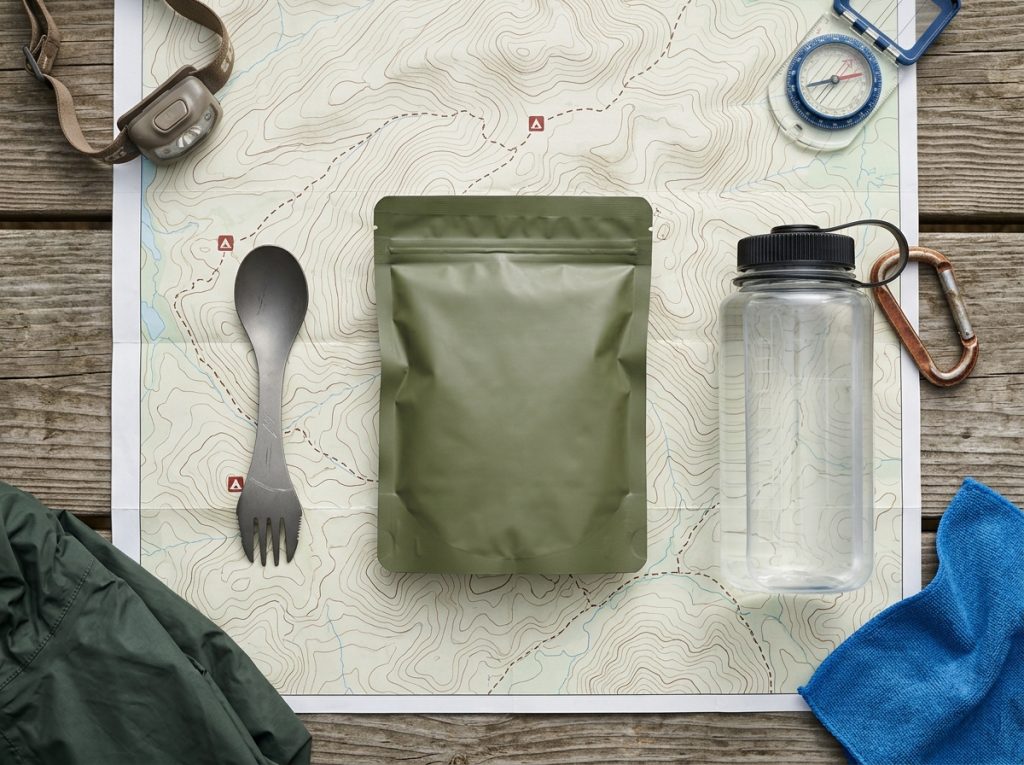
When you actually sit down to build an emergency food kit, the vague advice — “store some food and water” — falls apart fast. How much? Of what? For how many people? This guide gives you concrete numbers: a real shopping list by category, with quantities, calorie and water math, and a clear path from a 72-hour kit to a full year of supply.
The two numbers that drive everything
- Calories: plan for roughly 2,000 calories per person, per day. Active adults and cold climates may need more.
- Water: store at least 1 gallon per person, per day — for drinking and basic cooking. More in hot climates or for anyone with extra needs.
For a family of four, a 72-hour kit means about 24,000 calories and 12 gallons of water. A 30-day supply for that same family is roughly 240,000 calories and 120 gallons. Those figures look big, which is exactly why freeze-dried ingredients shine: they pack enormous calories into a tiny, shelf-stable footprint.
Build to tiers, not all at once. Get a solid 72-hour kit first, then extend to two weeks, then a month, then beyond. Each tier is a real milestone of readiness.
The category checklist
A balanced kit covers every food group so you’re not living on crackers. Here’s what to include and why:
| Category | Why it matters | Examples |
|---|---|---|
| Fruits | Energy, vitamins, morale | Strawberries, bananas, apples, blueberries |
| Vegetables | Fiber, variety in meals | Corn, peas, broccoli, peppers, onions |
| Meats | Protein, satiety | Chicken, beef, sausage crumbles |
| Dairy & eggs | Protein, cooking, baking | Powdered milk, cheese, whole eggs |
| Staples & bulk | Calorie backbone | Rice, beans, oats, wheat |
| Snacks | Morale, quick energy | Freeze-dried fruit, trail-friendly bites |
The fastest way to cover all of these at once is with bulk and variety packs, which bundle multiple food groups into a single purchase sized for weeks or months.
Tier 1: The 72-hour kit (per person)
- ~6,000 total calories (2,000/day x 3 days) of freeze-dried ingredients and staples
- 3 gallons of water, plus a basic filter
- A mix from at least three food groups so meals feel like meals
- A manual can opener and a way to heat water
Build Your Freeze-Dried Pantry
Hand-picked categories for this guide — sealed for 20–30 years, ready when you are.
Tier 2: Two weeks to one month
Scale the 72-hour numbers up. For one person over 30 days, that’s about 60,000 calories and 30 gallons of water. At this tier, prioritize:
- A calorie-dense base of grains and beans
- Reliable protein from freeze-dried meats and eggs
- Enough fruits and vegetables to keep meals balanced and palatable
- A robust water and filtration plan, since storing 30+ gallons per person gets bulky
Tier 3: Three months to one year
This is long-term resilience. The math per person:
| Duration | Approx. calories/person | Approx. water/person* |
|---|---|---|
| 3 months | ~180,000 | ~90 gallons |
| 6 months | ~360,000 | ~180 gallons |
| 1 year | ~730,000 | ~365 gallons |
*Storing a year of water outright is impractical for most homes — this is where filtration and treatment become essential, paired with a stored reserve. Freeze-dried ingredients sealed in #10 cans last 20-30 years, so a year’s supply can sit ready for decades without rotation headaches.
Don’t forget the non-food essentials
- Water filtration and purification — see water
- Cooking and heat source, fuel, and a manual can opener
- Lighting, first aid, and off-grid tools from survival gear
- Shelter and portability items from camping & outdoor
Practical tips that save you grief
- Store what you’ll actually eat. A kit full of foods your family hates won’t get used.
- Keep it cool and dark. A closet or basement beats a hot garage for shelf life.
- Label and date. Even with decades of shelf life, knowing what you have prevents waste.
- Plan for cooking water. Rehydrating ingredients uses water — budget for it beyond drinking needs.
Build your kit one tier at a time. Start with bulk and variety packs to cover the food groups efficiently, secure your water and filtration, and run your household’s numbers through our supply calculator. For the full readiness roadmap, visit our preparedness hub. The best time to build your kit is before you need it.