
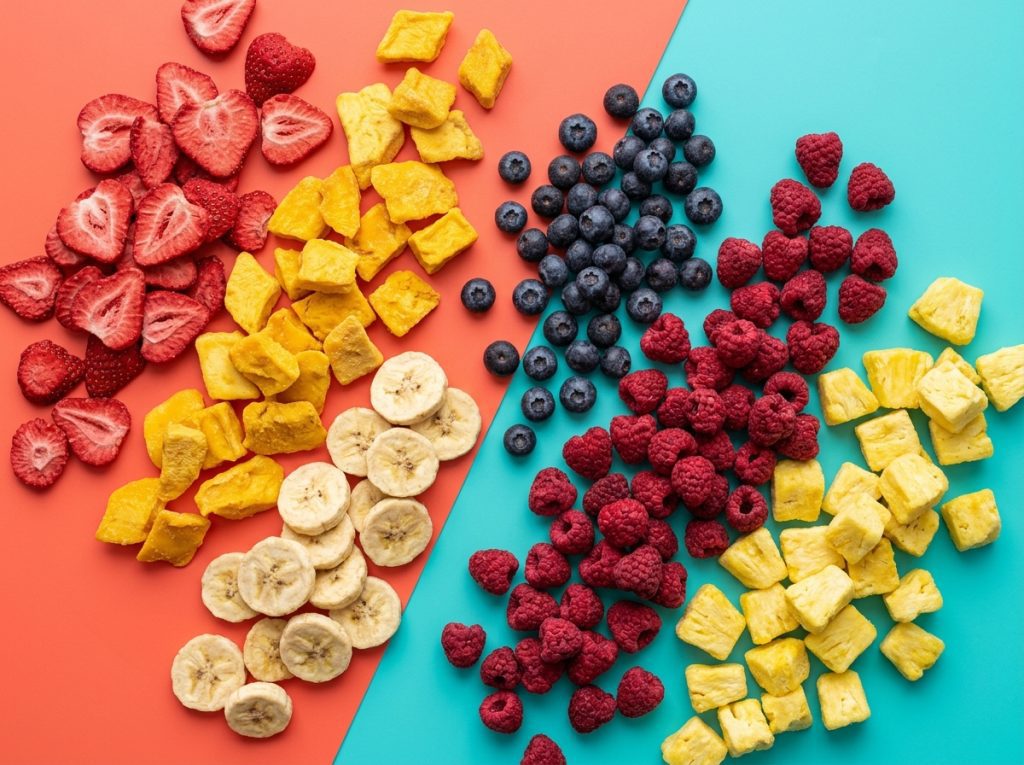
If you’ve ever stared at a wall of freeze-dried products and felt paralyzed, this is the list for you. After years of helping people build storage that they actually eat — not buckets that gather dust — a clear pattern emerges of what belongs in every well-stocked pantry. This is the definitive, category-by-category guide to what to stock, why each item earns its place, and the exact first ten items to buy if you’re starting from zero.
How to think about a complete stock
A great food storage plan isn’t a pile of one thing — it’s a balanced pantry that lets you cook real meals. Freeze-drying removes roughly 98–99% of moisture through sublimation at low temperature, so each of these ingredients stays light, retains most of its nutrients and flavor, and — sealed in #10 cans or Mylar with oxygen absorbers — stores for 20–30 years. Opened, use within a few months. Build across all the categories below and you’ll never be stuck with food you can’t turn into a meal.
The complete category list
Fruits
The easiest category to love and rotate. Stock strawberries, blueberries, bananas, apples, and a tropical pick like mango. They snack, they top oatmeal and yogurt, and they bake. Start in fruits.
Vegetables
The backbone of real cooking. Corn, peas, green beans, carrots, onions, peppers, and potatoes turn staples into actual dishes. Onions and peppers in particular punch above their weight as flavor builders. Browse vegetables.
Meats
Protein and satisfaction. Diced beef and chicken are the versatile core; add pork and sausage for variety. This is the category that keeps meals filling and morale high. See meats.
Dairy & eggs
What makes stored food taste like home cooking. Whole eggs, milk, butter powder, and cheese unlock breakfast and baking. Explore dairy & eggs.
Staples
Your calorie base. Rice, beans, oats, and other bulk carbohydrates provide the energy density a long-term plan needs and stretch your proteins and vegetables into full meals. Anchor this with bulk packs.
Snacks
Morale matters. Freeze-dried fruit, yogurt bites, and grab-and-go treats keep everyday life pleasant and your storage rotating. Visit snacks.
The best food storage isn’t the most calories per dollar — it’s the food your family will actually eat. Variety and flavor are what turn a stockpile into a working pantry.
Build Your Freeze-Dried Pantry
Hand-picked categories for this guide — sealed for 20–30 years, ready when you are.
The first 10 items to buy (in order)
If you’re starting from zero, buy these ten in this order. Each one builds toward complete, cookable meals:
- Whole eggs — the most versatile item you can own; breakfast and baking. Shop eggs.
- Diced beef — your workhorse protein for stews, chili, and skillets. Shop meats.
- Diced chicken — lean and endlessly adaptable.
- Milk — used daily for cooking, baking, and drinking.
- Strawberries — the fruit everyone eats; instant morale. Shop fruits.
- A vegetable medley — corn, peas, carrots to build real dishes. Shop vegetables.
- Onions — the single best flavor multiplier in storage.
- Potatoes / hash browns — cheap calories and a meal base.
- Bulk staple (rice or oats) — your calorie foundation. Shop bulk packs.
- Butter powder or cheese — the flavor that ties meals together.
Once the basics are covered
- Add variety within each category — more fruits, more meats — before going deeper on quantity.
- Layer in snacks and fruit for morale and easy rotation.
- Don’t forget water & filtration — one gallon per person per day — and consider survival gear and camping & outdoor gear to round out true preparedness.
Build your complete pantry
A truly stocked pantry covers every category — fruit, vegetables, meat, dairy, staples, and snacks — so you can cook real meals on any timeline. Run your household through the food storage calculator to size each category honestly, start with the first ten items above, and fill out your plan across the full shop. Build it balanced, build it to eat, and your storage becomes something you’ll actually use — not just something you own.