
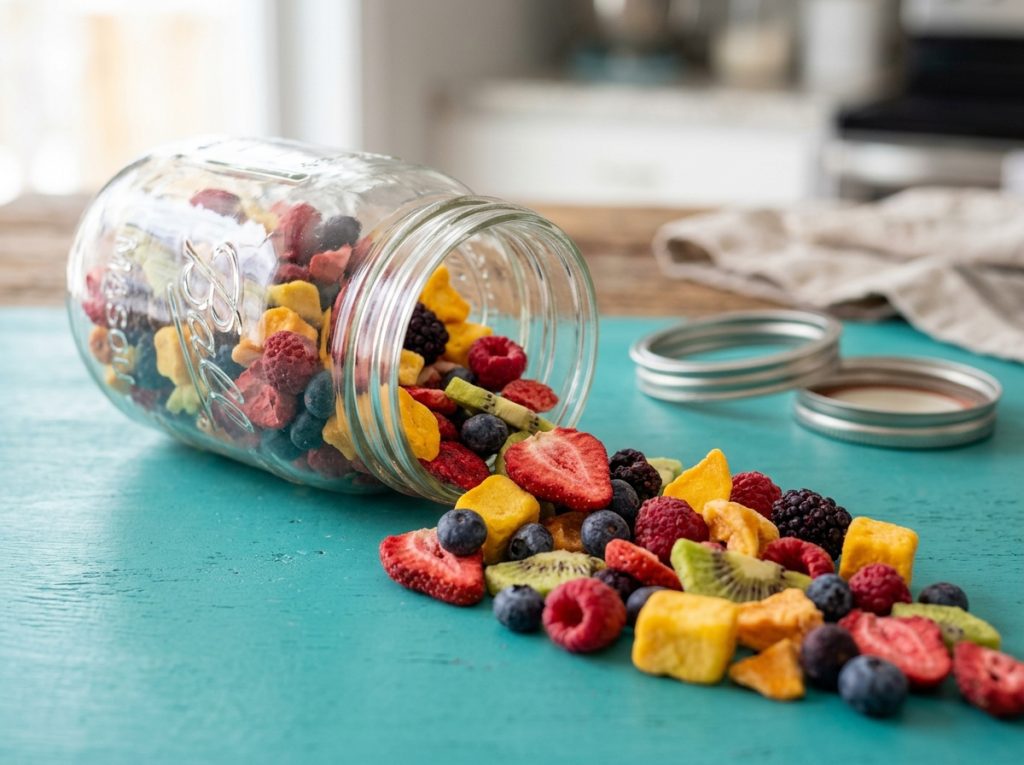
People often discover freeze-dried food through one door—emergency prep, maybe, or a backpacking trip—and are surprised by how many other ways it fits into daily life. The truth is, freeze-dried ingredients are one of the most versatile things you can keep in your kitchen. Here’s a tour of what they’re actually used for, with concrete examples for each.
Everyday cooking
This is the use that surprises most people. Freeze-dried ingredients aren’t just for “someday”—they make weeknight cooking faster and reduce waste to nearly zero. Because you scoop only what you need and reseal the rest, there’s no wilting produce and no half-used packages going bad.
- Toss freeze-dried vegetables straight into soups, stews, and casseroles—no chopping, no prep.
- Rehydrate diced chicken or ground beef from our freeze-dried meats for fast tacos, stir-fries, and pasta.
- Keep a flavor base on hand—diced onions and peppers ready whenever a recipe calls for them.
Once you’ve made dinner from a shelf-stable pantry on a night you had “nothing in the house,” you start cooking with freeze-dried food on purpose—not just in emergencies.
Emergency preparedness
This is the classic use, and freeze-dried ingredients excel at it. Sealed in #10 cans and Mylar with oxygen absorbers, they last 20–30 years, weigh little, and rehydrate with just water. A pantry of real ingredients means you cook familiar, comforting meals during a disruption instead of choking down something unrecognizable.
- Build a balanced supply across fruits, vegetables, meats, and dairy.
- Long shelf life means you stock once and rest easy for years.
- Pair with stored water and a filter so you can always rehydrate.
Camping and backpacking
For anyone counting ounces, freeze-dried food is a revelation. With roughly 98–99% of the moisture removed, you carry a fraction of the weight and add water once you reach camp.
- Lightweight protein: diced chicken or beef that rehydrates over a camp stove.
- No-cook snacks: freeze-dried berries and apple slices straight from the bag on the trail.
- Compact meals: combine veggies, meat, and a starch you bring along into a hot, real dinner.
Gear up for the trail at camping & outdoor.
Build Your Freeze-Dried Pantry
Hand-picked categories for this guide — sealed for 20–30 years, ready when you are.
Baking
Freeze-dried fruit is a baker’s secret weapon. Because it’s dry and intensely flavored, it adds color and concentrated taste without adding moisture to your batter.
- Crush freeze-dried strawberries or raspberries into a powder to flavor and naturally color frostings and cake batter.
- Fold whole pieces into muffins, scones, and cookies—no thawing, no soggy spots.
- Use egg and dairy powders as reliable baking staples that are always on hand.
Stock up on baking-friendly fruits.
Snacking
Plenty of freeze-dried fruits are genuinely delicious eaten dry—crisp, light, and naturally sweet, with nothing added.
- Freeze-dried strawberries, apples, and bananas make a clean grab-and-go snack.
- Perfect for lunchboxes, desk drawers, and road trips.
- A satisfying crunch without the mess of fresh fruit.
Which categories fit which use
| Use | Best-fit categories |
|---|---|
| Everyday cooking | Vegetables, meats, dairy & eggs |
| Emergency prep | All categories + water & gear |
| Camping/backpacking | Meats, fruits, lightweight staples |
| Baking | Fruits, dairy & eggs |
| Snacking | Fruits |
Whatever brought you here, there’s a good chance freeze-dried food fits more corners of your life than you expected. Plan a trail menu with camping & outdoor, stock the kitchen with fruits and meats, and use our supply calculator to dial in exactly how much you need. One versatile pantry, endless uses.
Freeze-Dried Food by Situation: Worked Examples You Can Copy
The list above covers what freeze-dried food can do. This section shows how it looks on an ordinary day, with one small plan for each situation. Quantities are examples, so scale them to your household and check each product's label for serving sizes and water amounts.
The weekend campsite
Two adults, one night, one stove. Pack dinner as three items in a zip-top bag: dry instant rice, freeze-dried chicken, and freeze-dried vegetables. Write the water amount on the bag. At camp, boil water, pour it in, stir, cover, and let it sit. Breakfast is instant oatmeal with a handful of freeze-dried berries. The entire food bag is a few light pouches, with no cooler and no ice. For longer trips, see our hiking food guide.
A three-day power outage
Say you have a gas range or camp stove and three people at home. Breakfast is rehydrated egg crumbles with vegetables, lunch is soup, and dinner is pasta with meat. If each meal needs about one cup of water, the arithmetic is 3 meals x 3 people x 3 days = 27 cups, or roughly 1.7 gallons. That is only for rehydrating, on top of drinking water. Add it to your water plan using our emergency water guide, and pair it with the power outage food plan so the fridge contents get eaten first.
Travel and hotel rooms
You have a hotel room with a kettle or a hot tap and no kitchen. Pack single-serve bags of instant couscous, freeze-dried vegetables, and a bouillon cube. Add hot water in a mug or bowl, cover, and wait a few minutes. Dry food is light and packs flat. If you cross an international border, check the destination's rules on meat, dairy, and plant products before you pack them.
In the oven: baking with fruit powder
Goal: frosting that tastes like fruit without getting runny. Crush a cup of freeze-dried strawberries into powder with a blender, or in a zip-top bag with a rolling pin. Stir it into a batch of buttercream a tablespoon or two at a time until the color and flavor are right. Fresh puree adds water, but the powder does not, though the frosting may stiffen and need a splash of milk. For muffins, toss whole pieces in a spoonful of flour first so they distribute evenly in the batter.
Lunchboxes and kids
A small sealed container of freeze-dried apple or strawberry slices is a lunchbox snack with no fridge needed. Keep the container closed, because the pieces soften when they absorb humidity. The pieces are hard and dry, so check with your pediatrician before offering them to babies and toddlers, and supervise young children. Older kids can help in the kitchen by measuring water into a bowl of vegetables for soup night.
Everyday cooking on a night with nothing thawed
Bring 4 cups of broth to a simmer. Add 1 cup of freeze-dried vegetables, half a cup of freeze-dried chicken, and a handful of noodles. Most pieces soften within about ten minutes in a simmering pot. Taste, salt, and serve. You can find more ideas in 20 easy freeze-dried meal recipes.
Gifting
A practical gift basket has one snackable fruit pouch, one baking pouch such as strawberries with the frosting method above written on a card, and one soup-night vegetable pouch. Ask about allergies first, give only sealed items, and write the purchase date on the card. Because food items at our retail partner Thrivalist are listed as non-returnable in its FAQ, start with small sizes. Browse the shop to build one.
Which situation should you start with?
- If you only want one trial purchase, pick a fruit pouch. You can eat it dry, bake with it, and judge the quality right away.
- If your goal is soup and dinner shortcuts, start with vegetables and a protein.
- If your goal is outage readiness, start with a small set of meals, then count your water.
- If your goal is the trail, pack what you will actually cook and test it at home first.
A short checklist before any of these plans
- Pick the situation, then write down the meals, not just the ingredients.
- Count the water and the fuel needed to rehydrate, using the label's water amount.
- Portion into small bags or jars, so the main container stays sealed.
- Do one home test run, so you know whether you like the taste and texture.
- Store everything cool, dry, and sealed, away from heat and humidity. If you want a number to plan around, the supply calculator can estimate quantities for your household.
Common mistakes
- Skipping a home test run before relying on a meal in the field.
- Forgetting the water and fuel needed to rehydrate.
- Leaving a pouch open on a humid day, where the food absorbs moisture.
- Giving gifts without checking for allergens.