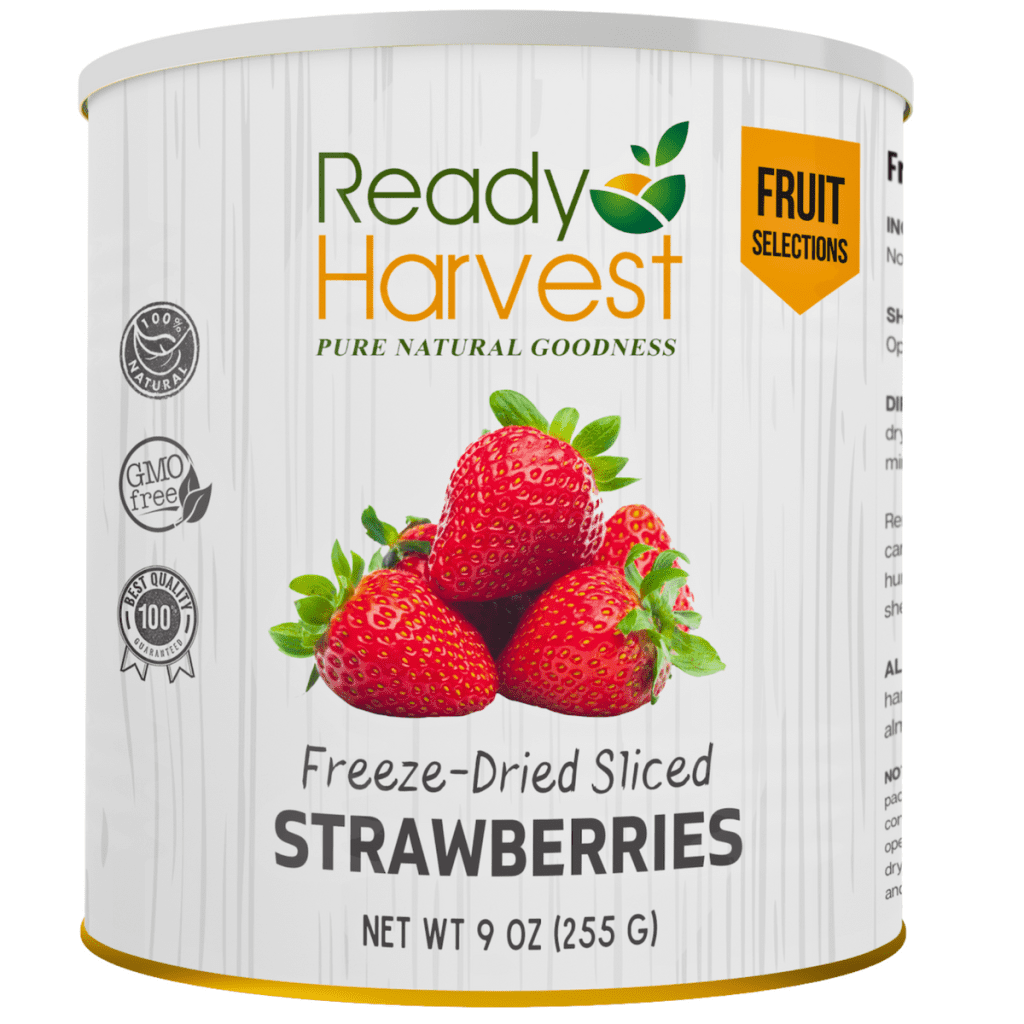
freeze dried strawberries

Freeze Dried Strawberries

Freeze-dried strawberries are whole or sliced strawberries with almost all of their water removed, leaving a light, crisp, intensely flavorful piece of fruit that keeps for decades. That crunch isn’t a coating or an additive, it’s what’s left when freeze-drying gently pulls roughly 98 to 99% of the moisture out of a ripe berry while preserving its shape, color, and most of its nutrients. The result is a no-mess, no-added-sugar pantry staple you can snack on straight from the bag, bake into anything, or rehydrate back toward fresh in minutes.

How Freeze-Dried Strawberries Are Made (and Why They’re So Crisp)

Freeze-drying, technically called sublimation, freezes the strawberries solid, then uses low pressure to turn the ice directly into vapor without ever passing through a liquid stage. Because the fruit is never cooked with high heat, the cell structure stays largely intact. When the water leaves, it leaves behind a delicate, airy lattice, which is exactly why a freeze-dried strawberry shatters with that signature crisp snap.

This is also why the color stays so vivid and the flavor tastes concentrated. With the water gone, the natural sugars and aromatics of the berry are no longer diluted, so each bite is essentially a more intense version of the fresh fruit.

A 25-Year Shelf Life, No Added Sugar

Sealed in a #10 can or Mylar pouch with an oxygen absorber and stored cool, dark, and dry, freeze-dried strawberries keep for 20 to 30 years. That’s the payoff of removing nearly all the moisture and oxygen, there’s almost nothing left for spoilage to work with.

Just as important: quality freeze-dried strawberries are 100% strawberry. No added sugar, no syrups, no preservatives. The sweetness you taste is the berry’s own, simply concentrated. That makes them a clean, simple ingredient you can feel good about reaching for daily.

One ingredient, one fruit, and a shelf life measured in decades, freeze-dried strawberries are about as honest as pantry food gets.

The Many Ways to Use Them

This is where freeze-dried strawberries earn their place as an everyday staple, not just an emergency one.

  • Cereal and oatmeal: sprinkle them in dry, they soften beautifully in milk or hot oats.
  • Baking: fold them into muffins, scones, pancakes, and quick breads without adding extra moisture that throws off your batter.
  • Smoothies: blend them straight in, no thawing, no watery mess, just concentrated berry flavor.
  • Snacking: eat them dry by the handful, they’re light, sweet, and shelf-stable enough to keep in a lunchbox or pack.
  • Garnish: crush them into a powder to dust over desserts, yogurt, frosting, or cocktails for color and punch.

How to Rehydrate Freeze-Dried Strawberries

Want them closer to fresh? Rehydrating is quick and forgiving.

  1. Place the strawberries in a bowl.
  2. Add warm water, just enough to barely cover them, so they don’t turn mushy.
  3. Wait 3 to 5 minutes, stirring once or twice.
  4. Drain off any excess and use them in sauces, toppings, compotes, or fillings.

A tip: don’t over-soak. Freeze-dried fruit rehydrates fast, and too much water or time leaves you with soft, waterlogged berries. Start with less liquid, you can always add more.

Nutrition Retention

Because freeze-drying is a low-temperature process, freeze-dried strawberries retain most of their nutrients and flavor, far more than methods that rely on high heat. You’re getting the fruit, just with the water taken out, which also means a little goes a long way and the natural flavor reads as more intense.

Storing Strawberries Once You Open the Bag

The 20-to-30-year shelf life applies to a sealed container. Once you open it, oxygen and humidity get back in, so the clock speeds up. To keep that crisp texture:

  • Reseal the pouch or can tightly after every use, push out excess air.
  • Store opened product in an airtight container if the original packaging doesn’t reseal well.
  • Keep it cool, dark, and dry, away from steamy stoves and sunny counters.
  • Use opened product within a few months for best crunch and flavor.

Why They Belong in Every Pantry

Freeze-dried strawberries bridge the gap between “emergency food” and “food I actually want to eat.” They never go bad before you finish them, they don’t bruise or mold, they add real fruit to breakfasts and baking year-round, and they quietly build toward your long-term storage goals at the same time. That dual purpose, everyday treat and decades-long staple, is exactly what makes them one of the smartest items to keep on hand.

Stock up on freeze-dried strawberries and the rest of our crisp, no-added-sugar freeze-dried fruits, then use the supply calculator to figure out how much your household should keep on the shelf.

Build Your Freeze-Dried Pantry

Hand-picked categories for this guide — sealed for 20–30 years, ready when you are.

Shop All Categories →

15 Practical Ways to Use Freeze-Dried Strawberries (Plus Kid Snacks, Baking Dust and Powder)

A can of freeze-dried strawberries is easy to eat dry and easy to forget about. These ideas go past the usual cereal-and-smoothie list, so the last third of the can gets as much use as the first handful.

Fifteen uses worth trying

  1. Strawberry shortcake in minutes. Toss slices in a little warm water for a few minutes, spoon over biscuits, and add whipped cream.
  2. Parfait layers. Alternate yogurt, granola, and dry slices; the fruit softens slightly as it sits.
  3. Strawberry milk. Stir fine powder into cold milk, or blend whole slices into it and strain if you prefer it smooth.
  4. Chocolate bark. Press slices into melted chocolate on a tray and let it set. White chocolate shows the color best.
  5. Ice cream topping. Crush slices coarsely and sprinkle on vanilla ice cream just before serving so they stay crunchy.
  6. Cream cheese frosting. Fold powder into frosting for flavor and a pink color with no dye.
  7. Overnight oats. Add a handful the night before. They rehydrate in the milk and give the oats a fruit flavor.
  8. Cheesecake topping. Rehydrate lightly with a little juice and spoon over the top.
  9. Spinach salad. Crumble a few slices over greens with nuts and goat cheese for a sweet-and-salty bite.
  10. Quick vinaigrette. Whisk powder with vinegar, olive oil, salt, and a touch of honey.
  11. Stovetop compote. Simmer rehydrated berries with a little sugar and lemon juice until saucy. It is a topping, not a canning recipe.
  12. Pitcher water or lemonade. Drop in a few slices to infuse color and flavor.
  13. Popsicles. Blend with yogurt or juice, pour into molds, and freeze.
  14. Pancake and waffle batter. Add crushed pieces to the dry mix, then cook as usual.
  15. Trail mix. Combine with nuts, seeds, and white chocolate chips or cereal for lunchboxes and hikes.

What to expect on texture

Set your expectations by form, because the same berry behaves differently depending on how you use it.

  • Dry: light, brittle, and crisp, with a snap that dissolves quickly on the tongue. Some pieces stick slightly to the teeth.
  • Lightly moistened: chewy and tender, like a soft candy made of fruit.
  • Fully rehydrated: softer and less juicy than a fresh berry. It does not regain the firm bite of a fresh one, so it works better in sauces, fillings, and toppings than served on its own.
  • Powdered: a light pink dust that is easy to blend into batters and frostings but absorbs humidity fast.

Kid snack ideas

  • Fill small containers with a handful of berries and a few crackers or pretzels.
  • Serve with a small cup of yogurt for dipping.
  • Make a "pink cereal" bowl with plain puffed cereal and dry slices.
  • Roll banana slices in strawberry powder for a dusted treat.

A few cautions apply. Strawberries are a known allergen for some children. Hard, dry pieces can also be a choking concern for very young children, so ask your pediatrician about age-appropriate textures, and many parents crush the fruit or serve it dissolved into food for toddlers. Supervise snack time either way.

Baking dust and powder, step by step

  1. Put a small handful of berries into a blender or spice grinder. Work in short pulses.
  2. Sift through a fine strainer to remove seeds and coarse bits. The fine dust is what you want for decorating.
  3. Use a tablespoon at a time. Add it to frosting, whipped cream, cookie dough, or glaze until the color and flavor are right.
  4. Dust it over finished desserts just before serving. Moisture dulls the color and turns it sticky.

The coarse leftover pieces from sifting are good in granola or baked into muffins, so nothing goes to waste. Because powder is mostly fruit, it behaves like a flavoring and coloring, not a sweetener, so you may still want sugar in a recipe.

Keeping the crunch past week one

The basics are covered above on the main page. Beyond those, here are practical habits:

  • Pour a week's supply into a jar and keep the main bag sealed.
  • Test with one piece: if it snaps cleanly, it is dry. If it bends or feels tacky, it has taken up moisture.
  • Choose a jar with a tight lid, not a plastic bag you reuse a dozen times.
  • Powder clumps first, so make small batches.
  • If the berries smell fermented or you see mold, throw them out.

Buying tips

Whole berries are fun to eat but take up more space; sliced berries pack tighter and suit baking. Read the label for a single ingredient, and compare price per ounce rather than per bag. Our strawberry buyer's guide walks through what to look for, and the freeze-dried fruits page shows what is available now. For other fruit ideas, check the fruit usage guide, and see crunchy snack ideas for mix-and-match combinations. Rehydrating? Use the steps in our rehydration guide.