
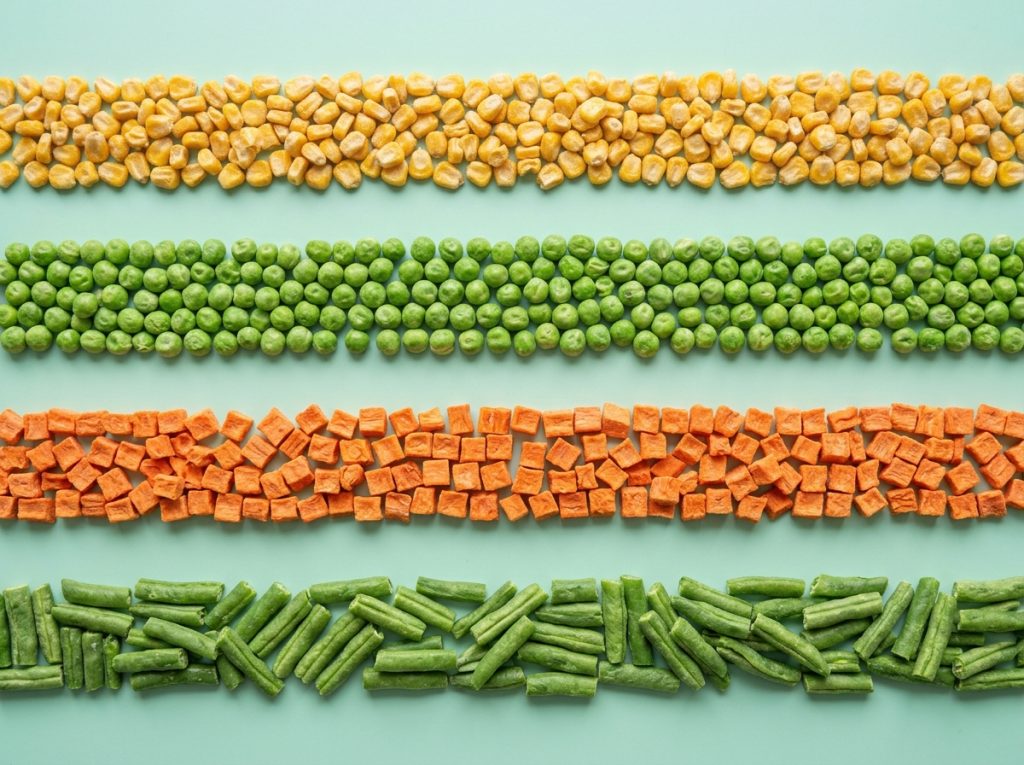
Build Your Freeze-Dried Pantry
Hand-picked categories for this guide — sealed for 20–30 years, ready when you are.
Search “best brand of freeze-dried meals” and you’ll find a wall of opinions. The honest answer is that the best brand for you is the one with real, single-ingredient and meal options, a verifiable long shelf life, and food your family will actually eat. Below is how to judge that for yourself, and why Thrive Freeze is where many families land.
What “Best” Really Means
- Real ingredients: Can you buy individual fruits, vegetables, meats, and dairy, not just pre-mixed pouches? Single ingredients give you flexibility to cook the way you already cook.
- Shelf life you can trust: Quality freeze-dried food, properly sealed and stored, can last up to 25-30 years.
- Nutrition and taste: Variety and flavor keep morale up during a stressful stretch.
- Honest fulfillment: Clear shipping, sourcing, and support matter as much as the food itself.
Freeze-Dried vs. Dehydrated
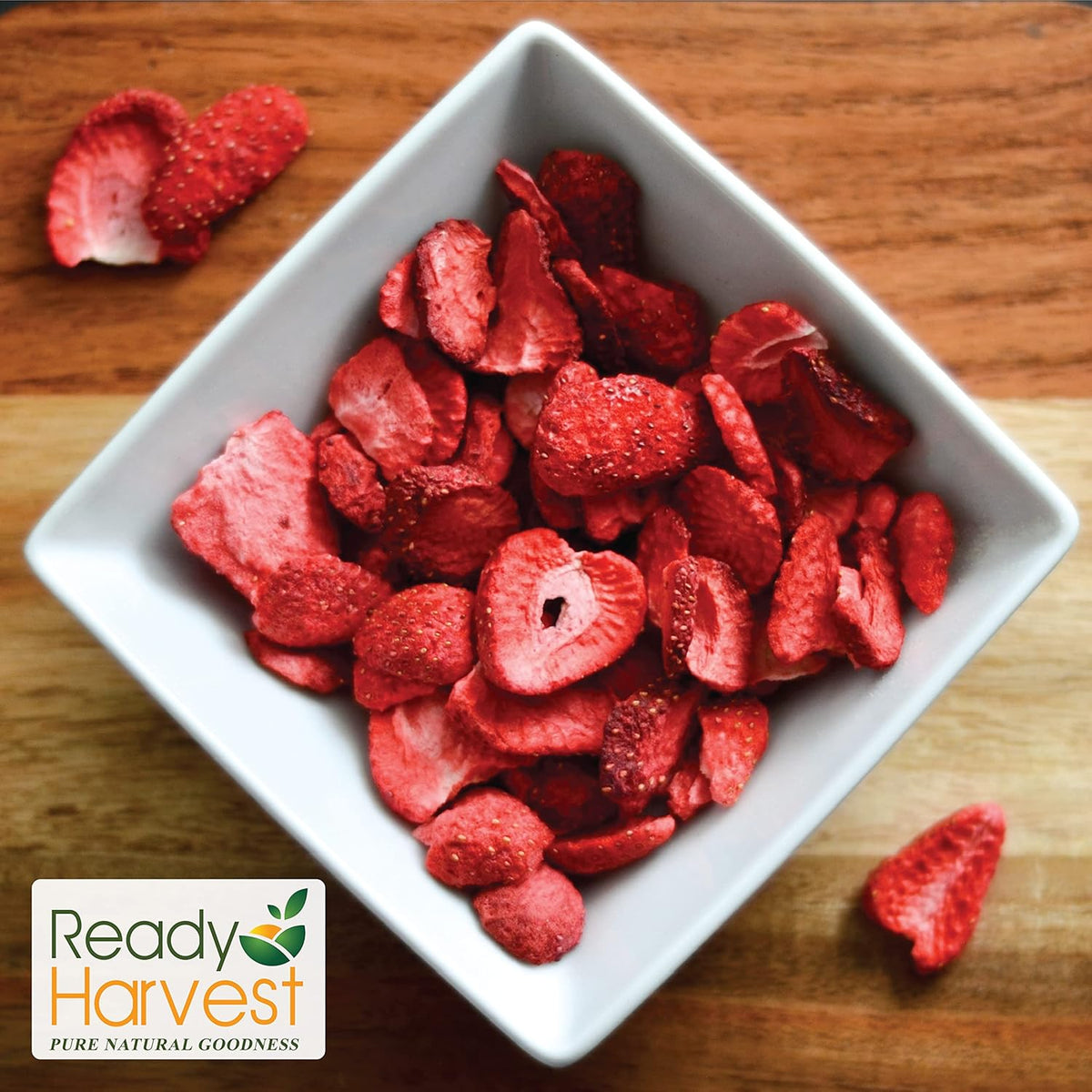
Freeze-drying pulls moisture out at very low temperatures, locking in texture, color, and most nutrients and delivering the longest shelf life. Dehydrating uses gentle heat; it’s great for vegetables and stores compactly, but typically lasts fewer years. The strongest pantries use both.
Why Families Choose Thrive Freeze
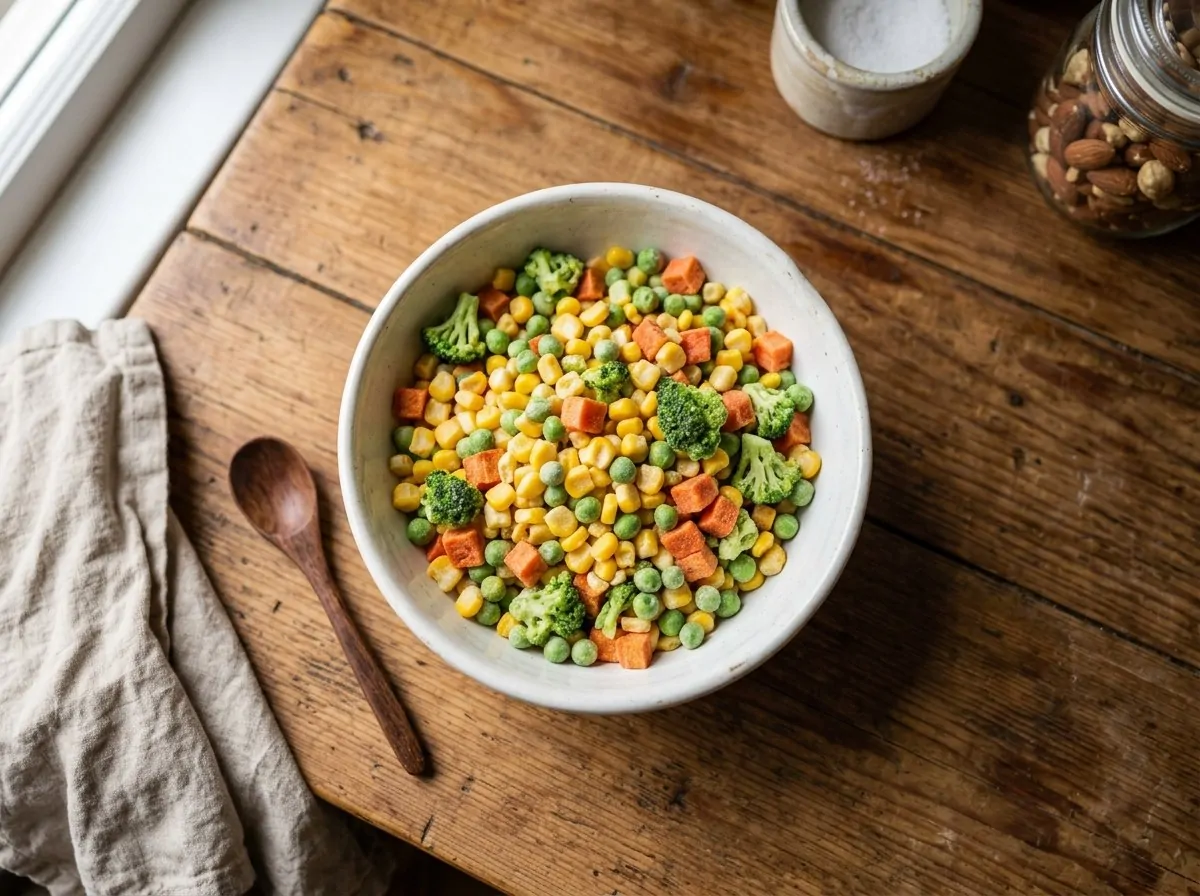
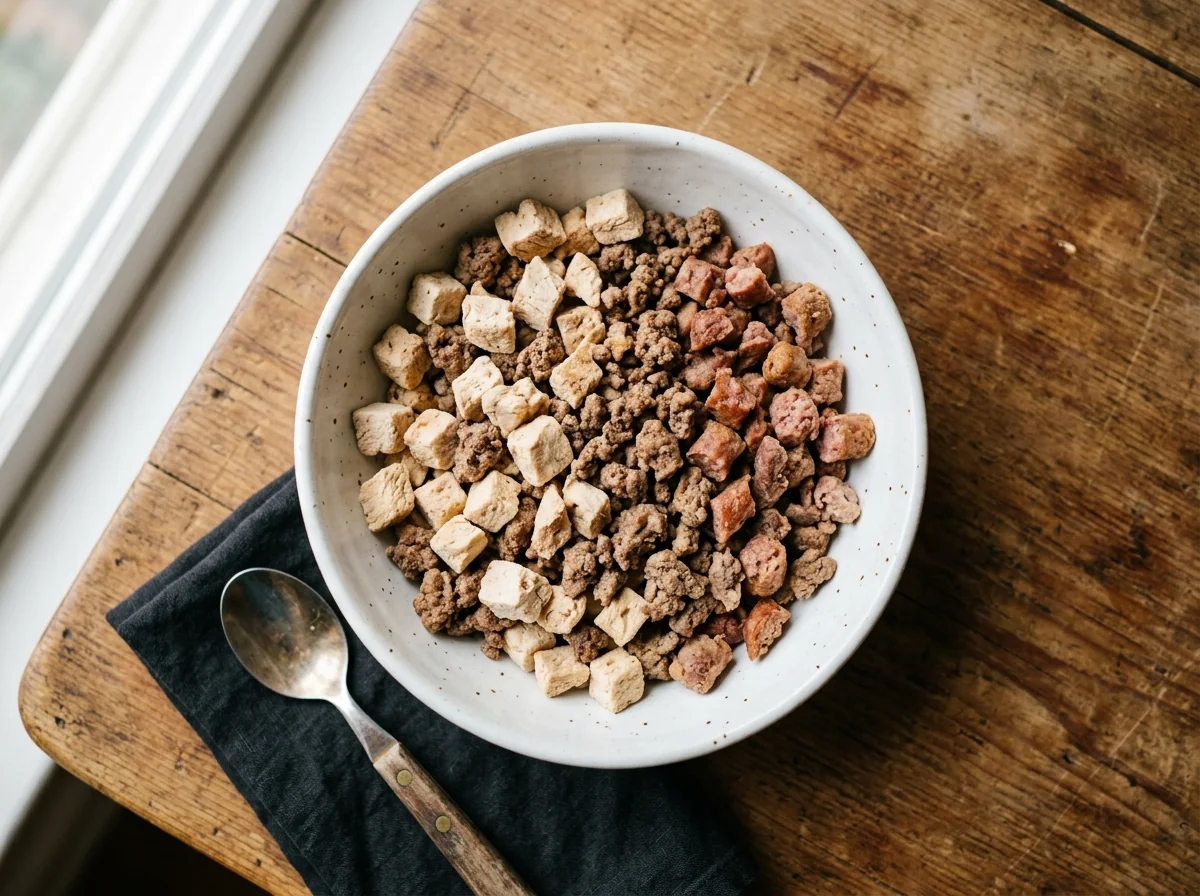
Thrive Freeze has guided more than 10,000 families since 2018, and we keep it simple: real freeze-dried and dehydrated food, honest advice, and no pressure. You can build a supply from genuine single ingredients across fruits, vegetables, meats and proteins, and dairy and eggs, or grab ready-to-eat freeze-dried snacks. Our partners handle shipping, and we may earn a commission through our links at no extra cost to you.
Match the Brand to Your Goal
- Everyday cooking: Stock the single ingredients you use most.
- Emergency readiness: A supply pack in a 1-, 3-, or 6-Month size takes the guesswork out.
- Outdoor trips: Lightweight, water-only meals and snacks travel well.
Not sure which fits? Tell Aria, our free advisor, about your household and she’ll point you to the right starting kit.
How Much Do You Need?
Our calculator turns the number of people and days into a clear list. From there you can add water and filtration and survival gear to make your food genuinely usable.
The Bottom Line
There’s no single “best brand” that fits every kitchen, but there is a clear set of standards: real ingredients, honest shelf-life claims, variety, and support you can reach. Thrive Freeze is built around exactly that. Browse the preparedness guide, run your numbers in the calculator, or call (832) 479-4428.
Real freeze-dried & dehydrated food with up to 30-year shelf life — shipped by our trusted partners.
A Brand-Comparison Scorecard You Can Fill In Yourself
Any ranking of freeze-dried meal brands goes stale quickly: recipes change, prices move, and packaging sizes shift. A scorecard does not. This section gives you a one-page method for comparing any two or three brands side by side using numbers printed on the package or the product page, plus a worked example so you can see how the math behaves.
The Scorecard
Copy this into a notes app or a spreadsheet and fill one column per brand. Record what the label says, not what you hope it means.
| Line | What to write down | Warning sign |
|---|---|---|
| Price per package | Total price for the can, pouch or pail, before shipping | Price shown only for a "bundle" with no per-item breakdown |
| Servings per package | The number on the label | No serving size given, or a serving defined as a very small amount |
| Calories per serving | From the nutrition panel | No panel online or on the pouch |
| Ingredients | First five ingredients, plus any additives | Long lists you cannot read, or heavy salt and sugar |
| Packaging | Pouch, #10 can or pail; resealable or not | No statement about moisture or oxygen protection |
| Shelf-life claim | The exact wording, "up to" or "best by," and the number of years | A big number with no explanation of storage conditions |
| Return policy | Window, condition (unopened?), who pays shipping | Food listed as final sale with no sampler size available |
| Shipping | Free-shipping threshold, delivery window | Shipping costs that change the total price noticeably |
Worked Example: Cost per Serving and per 2,000 Calories
The numbers below are made up and round, for illustration only. They are not real brands or real prices. Replace them with the figures from the products you are comparing.
- Example Brand A: 2 servings per pouch, 300 calories per serving, $12 per pouch.
- Example Brand B: 30 servings per pail, 200 calories per serving, $90 per pail.
- Example Brand C: 4 servings per pouch, 250 calories per serving, $20 per pouch.
Step 1: Cost per serving
Divide the price by the servings.
- A: $12 / 2 = $6.00 per serving.
- B: $90 / 30 = $3.00 per serving.
- C: $20 / 4 = $5.00 per serving.
Step 2: Cost per 2,000 calories
Divide 2,000 by the calories in one serving to find how many servings equal a day of food, then multiply by the cost per serving.
- A: 2,000 / 300 = 6.67 servings. 6.67 x $6.00 = about $40.
- B: 2,000 / 200 = 10 servings. 10 x $3.00 = $30.
- C: 2,000 / 250 = 8 servings. 8 x $5.00 = $40.
What the example shows
C looks cheaper than A per serving ($5 vs. $6), but they cost the same per 2,000 calories because A's servings are larger in calories. B wins on both measures here, yet it only makes sense if you will eat the flavor 30 times. Per serving, per package and per 2,000 calories are three different lenses, and per 2,000 calories is the fairest for comparing meals of different sizes. For real-world numbers, our cost per 2,000 calories comparison uses the same approach.
Scoring the Non-Price Lines
Give each brand 0 to 2 points on each of these lines. Add them up after the price math.
- Ingredients: 2 if the list is short and readable, 1 if it includes a few additives, 0 if it is hard to read.
- Packaging: 2 if it states moisture and oxygen protection and is resealable, 1 if only one of the two, 0 if nothing is said.
- Shelf-life claim: 2 if the wording is specific about storage and unopened packaging, 1 if it is a number only, 0 if it is vague. A taste guarantee counts, but read the terms. Our piece on shelf life vs. warranty explains the difference.
- Return policy: 2 if unopened items can be returned within a stated window, 1 if only damaged or wrong items, 0 if there is no policy.
A brand that scores 8 out of 8 on these lines but costs far more per 2,000 calories may still be the right choice for a camping trip. A brand that scores low on three lines and wins only on price needs a closer look.
Match the Score to the Use
- Camping or hiking: weight and prep time matter more than cost per 2,000 calories. See freeze-dried meals for the category overview.
- Emergency storage: weigh the shelf-life wording and packaging most heavily, and make sure you will eat the flavors.
- Everyday cooking: single ingredients usually win on cost and flexibility, so compare per-ingredient pricing instead of per-meal.
If your budget is the constraint, start with our guide to freeze-dried meals under $50, then use the scorecard to break ties.
Do a Taste Test Before You Commit
Once the scorecard narrows your list to two brands, order one pouch of each flavor you would actually eat. Judge on three points: whether the portion fills you up, whether the seasoning is salty, and whether the texture is acceptable after the stated rehydration time. If a seller does not allow returns on food, a single pouch is the cheapest way to learn this. You can also ask Aria, our free AI advisor, to help you build a tasting order.