
Cooking With Freeze-Dried Ingredients: Order, Timing and Example Meals
Pouch meals are only one use. Freeze-dried vegetables, meats, fruit and eggs also work as ingredients in the dishes you already make. The trick is knowing when each one goes into the pot.
Three Kinds of Ingredients
- Tough and dense: meat pieces, carrots, potatoes, beans. They need the most liquid and time.
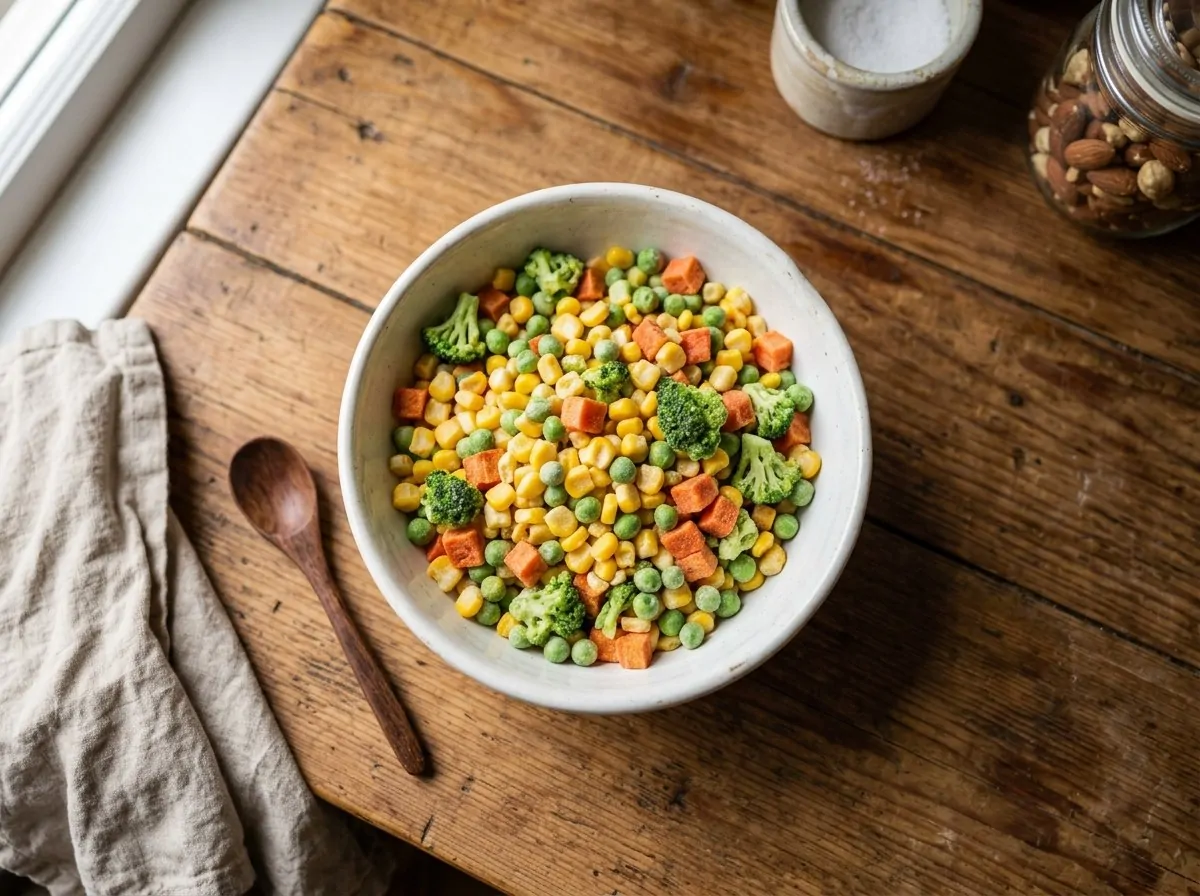
- Tender: peas, corn, bell peppers, onions, spinach. They soften quickly.
- Delicate: fruit, cheese, dairy powders, fresh herbs. They go in last, or need no heat at all.
Order of Operations for a Pot
- Heat your liquid, such as broth, water or a sauce base.
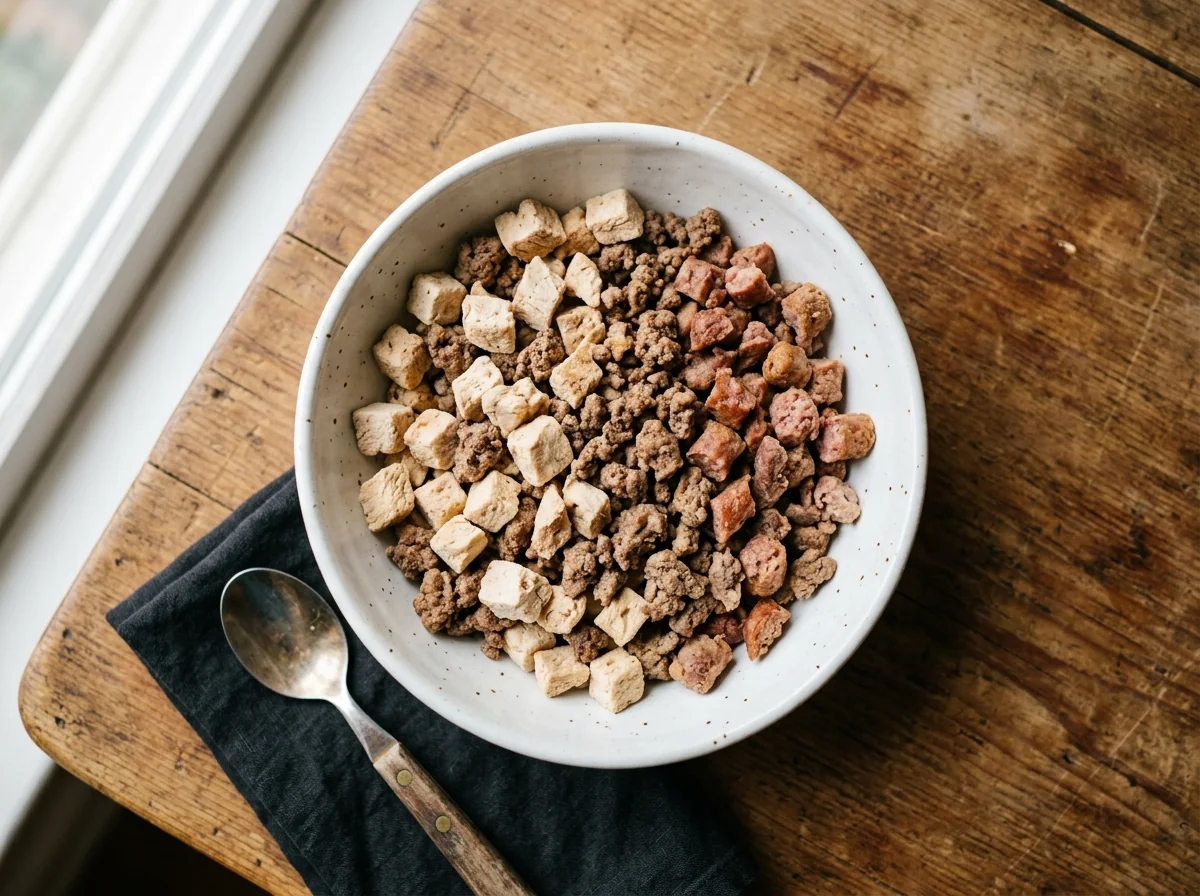
- Add meat pieces first. Many simmer for roughly 10 to 20 minutes, but taste a piece to check.
- Add dense vegetables next.
- Add rice or pasta at its normal point, keeping its usual timing.
- Stir in tender vegetables for the last 5 to 10 minutes.
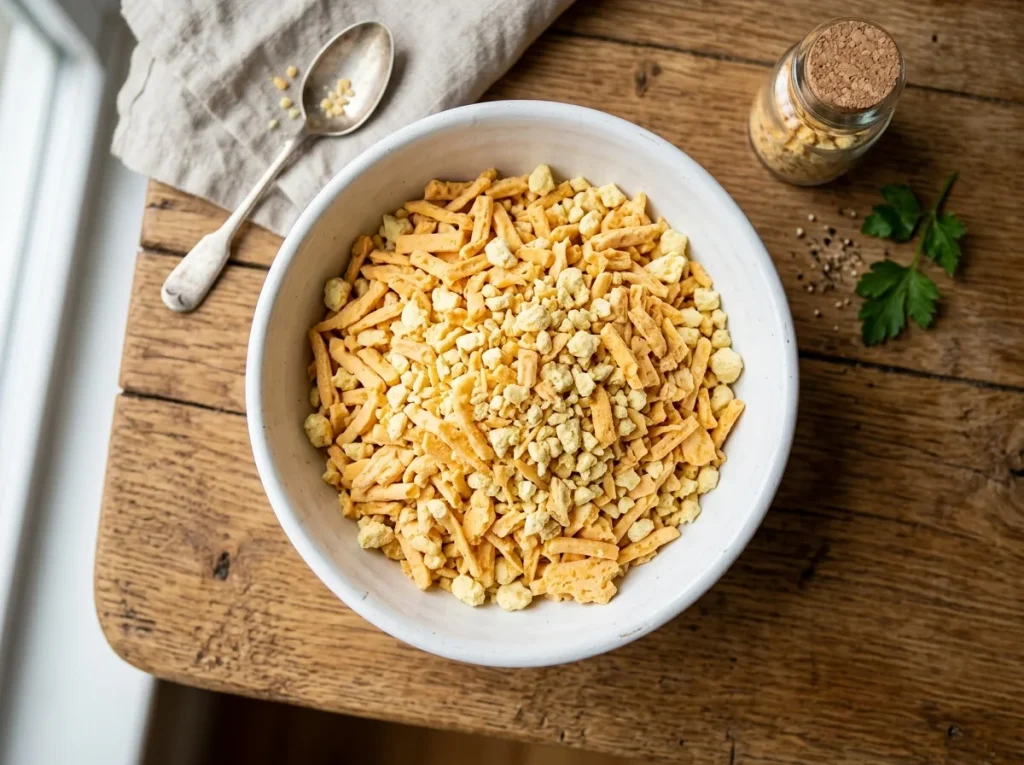
- Turn off the heat, then add dairy, cheese or egg powder, so they do not curdle or clump.
- Taste, then add salt last. Freeze-dried pieces soak up seasoning.
Extra Liquid Matters
Freeze-dried pieces drink from the dish. As a starting point, add roughly as much extra liquid as the volume of dry pieces you put in, then adjust near the end. Worked example: a soup that normally uses 6 cups of broth, plus 1 cup of freeze-dried chicken and 1 cup of freeze-dried vegetables, starts at about 6 + 2 = 8 cups of liquid. If it looks too thick later, a splash more fixes it. If it is too thin, simmer a few more minutes. Our rehydration guide covers troubleshooting in detail.
Cold Versus Hot Rehydration
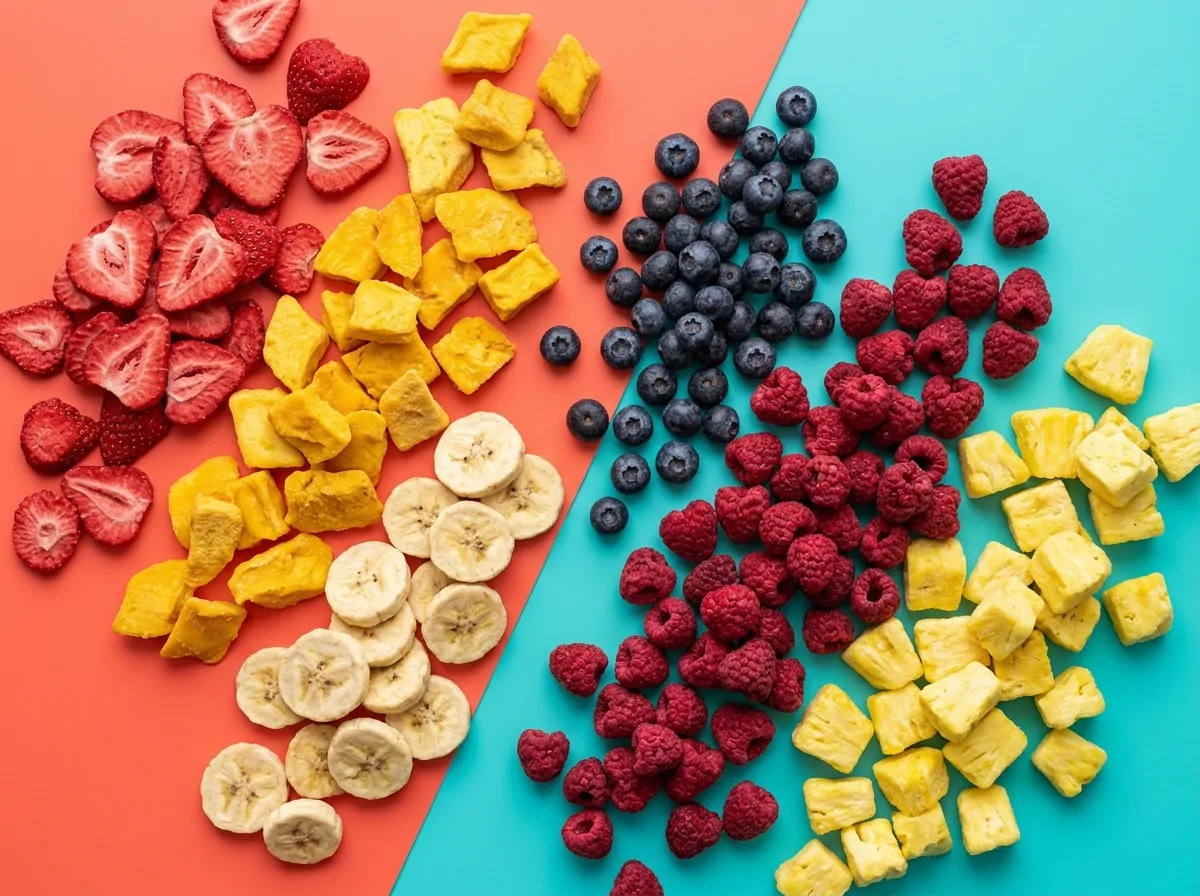
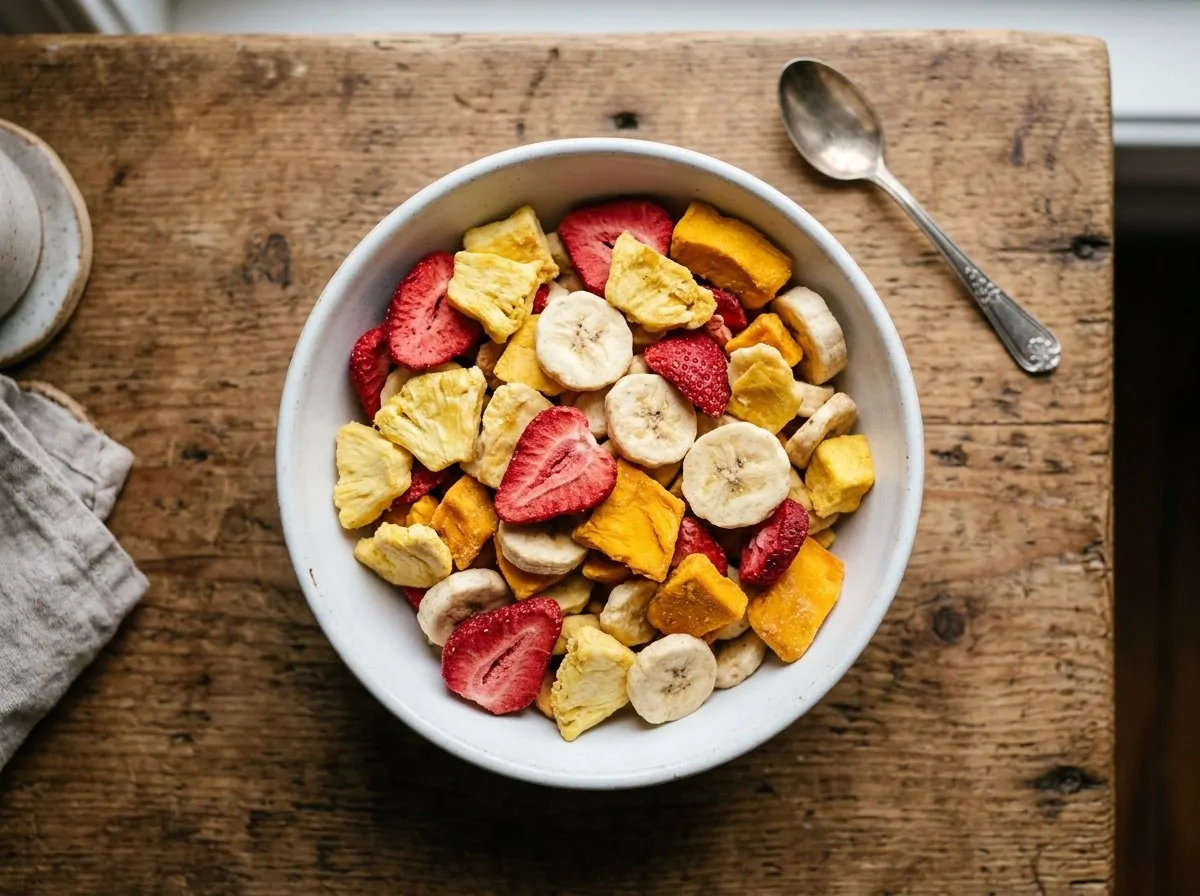
- Cold works well for: fruit, overnight oats, yogurt bowls and smoothies. Plan ahead, since cold soaks often take an hour or more.
- Hot works better for: meats, dense vegetables, egg dishes and anything you plan to eat warm.
- Safety note: once rehydrated, treat food like fresh cooked food. If it sits at room temperature for more than about two hours, refrigerate it or discard it.
Example Meals
Weeknight Beef and Vegetable Skillet
Soften freeze-dried onions in a little oil, add freeze-dried ground beef and its liquid, then rice and the rice's usual liquid plus about a cup extra for the dry pieces. Cover and simmer. Add freeze-dried peas or corn near the end and finish with seasoning. Check the rice and add liquid in splashes if it looks dry.
Chicken Noodle Soup
Bring broth to a simmer, add freeze-dried chicken and carrots, then noodles. Add celery or peas near the end. This is an easy way to use a small amount of several different ingredients.
Overnight Oats With Fruit
Combine oats, milk or water and a handful of freeze-dried fruit in a jar and refrigerate. The fruit often softens as it takes up liquid. Stir in a sweetener if you like.
Hot Oatmeal With Berries
Stir freeze-dried berries into oatmeal for the last minute of cooking. They disperse quickly and give color and tartness. For more breakfast ideas, see our breakfast comparison.
Chicken and Rice Casserole
Stir freeze-dried chicken and vegetables into a sauce with extra liquid, since the dry pieces pull moisture from the sauce during baking. Cover with foil and bake until hot and bubbling throughout. Keep it covered at first so it does not dry out.
Quick Swaps in Recipes You Already Make
- Onions and peppers: add freeze-dried pieces to the sauce at the start, so they soften while the base simmers.
- Spinach or other greens: stir into pasta sauce, soup or scrambled eggs in the last couple of minutes.
- Ground beef: use it in tacos, chili or pasta sauce, with a little extra liquid to bring it back.
- Corn: drop into chili or cornbread batter and let the moisture around it do the work.
- Egg powder: follow the package for scrambling, and for baking mix it with the dry ingredients first.
Seasoning and Flavor Building
Freeze-dried ingredients usually still need seasoning. Build flavor in layers: soften onion or garlic in oil first, use broth instead of plain water where it suits the dish, and add tomato paste for depth. Season lightly at the start, then adjust at the end, since the pieces keep absorbing flavor as they sit. A splash of lemon juice or vinegar wakes up a dish that tastes flat.
Mistakes to Avoid
- Dumping everything into the pot at once, which leaves delicate foods mushy and dense foods hard.
- Draining liquid that carries flavor, when it could go into the dish.
- Salting heavily before the pieces have softened, then finding it too salty.
- Adding dairy to a rolling boil, which can cause clumping or curdling.
- Skipping a stir, so pieces float on top and stay dry.
Habits That Help
- Keep your most-used ingredients in a working jar near the stove.
- Cook a small test batch before you rely on any recipe in an emergency.
- Write down your own ratios after the first try so you can repeat what worked.
For more ideas, browse 20 easy freeze-dried meal recipes, or shop freeze-dried vegetables and meats and proteins to build your own combinations.