Freeze-dried fruit is one of those products that sounds simple until you start comparing brands. The same type of fruit—strawberries, say, or pineapple—can vary wildly in flavor intensity, texture, packaging quality, and price-per-ounce depending on who made it. We have eaten our way through every major freeze-dried fruit brand on the U.S. market in the past two years, and below is the honest, opinionated guide that we wish we had when we started.
This guide focuses on standalone freeze-dried fruits sold in pouches, #10 cans, and bulk buckets—not freeze-dried meals or yogurt bites. If you are after fruit for snacking, baking, smoothies, granola, or long-term emergency storage, this is the lineup that matters in 2026.
Quick Verdict: The Best in Each Category
Best overall fruit pouches: Thrivalist—the flavor and crunch are noticeably better than the supermarket-tier brands, and the resealable pouches are well-engineered. Best #10 can value: Augason Farms—cheapest per ounce, decent quality, hard to beat for long-term storage. Best for backpacking and snacks: Mother Earth Products—single-serving pouches you can throw in a backpack without worrying about crushing. Best for baking and smoothies: Harmony House—sells fruit powder versions plus standard pieces, ships fast, no minimum order pressure. Best premium splurge: Mountain House—not the cheapest, but the strawberries in particular are exceptional.
What “Freeze-Dried” Actually Means (and Why It Matters)
Freeze-drying is a low-temperature water-removal process that preserves about 97% of the original nutrients and almost all the original flavor. The fruit is frozen solid, then placed in a vacuum chamber where the ice sublimates—going directly from solid to vapor without ever becoming liquid. The result is a dry, lightweight, crispy product that rehydrates in seconds with water and tastes remarkably close to fresh.
This is fundamentally different from dehydrated fruit, which uses heat to drive off water and produces a chewy, leathery texture (think raisins or dried mango from a regular grocery store). Dehydration also kills more nutrients and concentrates sugar, which is why dehydrated fruit tastes much sweeter and freeze-dried fruit tastes much closer to the original.
For shelf life, freeze-dried fruit in a sealed #10 can or mylar pouch with oxygen absorbers will last 25-30 years according to manufacturer claims, with most independent testing supporting at least 20 years if storage temperatures stay below 70°F. Open pouches last 1-2 weeks at peak crispness before they start absorbing humidity.
Best Freeze-Dried Fruit by Type
Strawberries
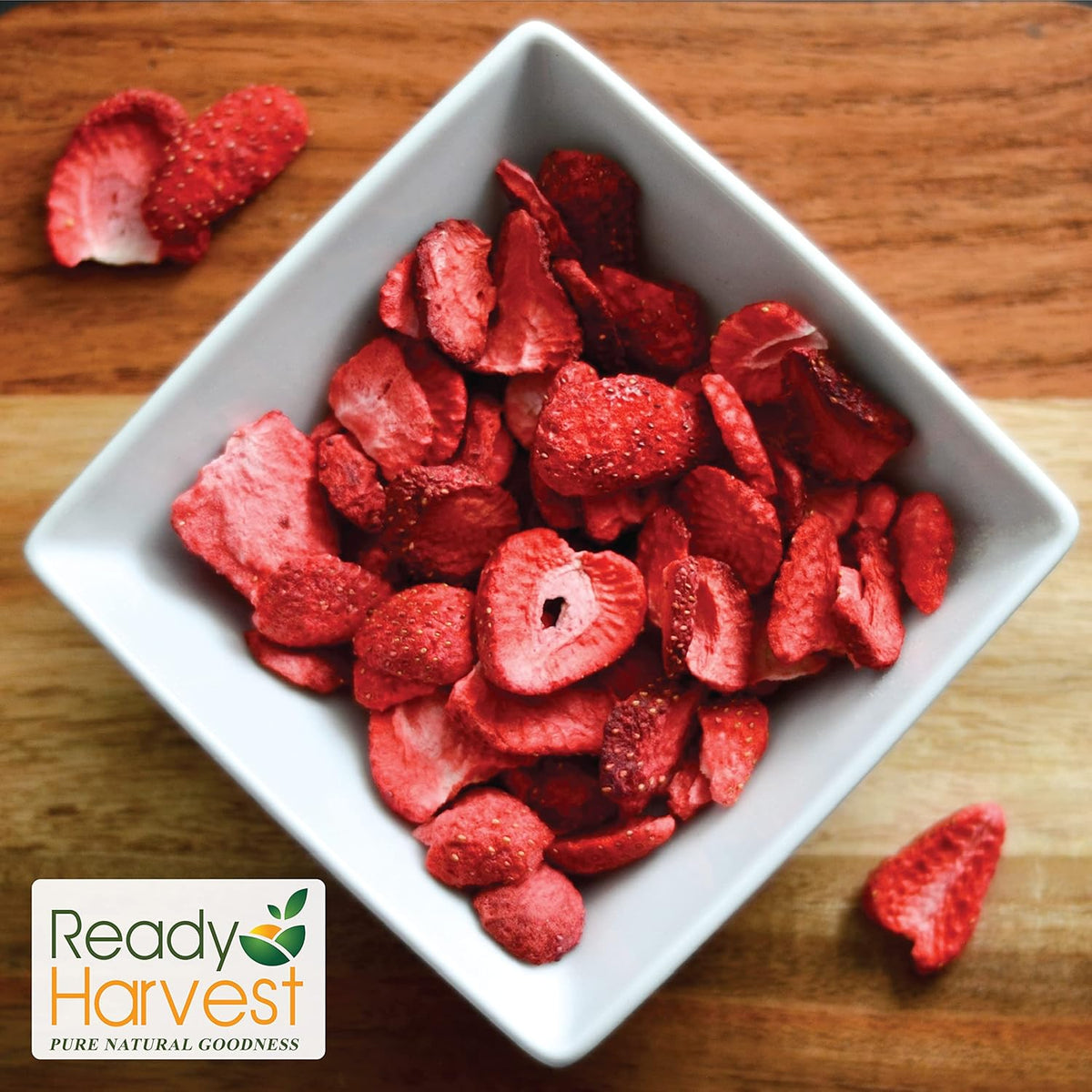
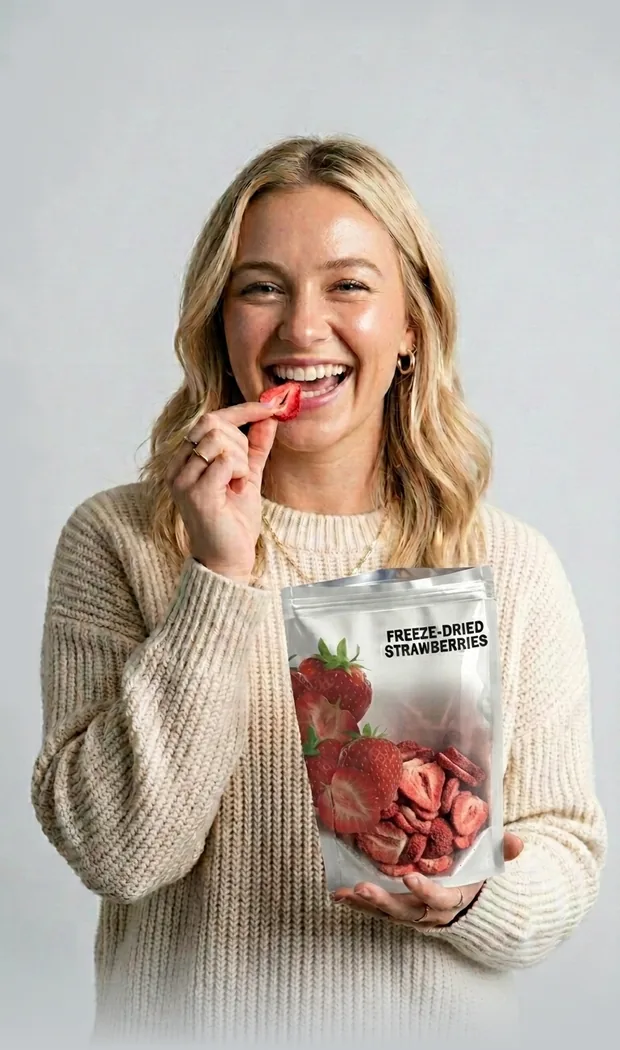
Strawberries are the gateway fruit—the one most people try first and the one where brand differences are most obvious. Mountain House strawberries are the gold standard for flavor intensity, with a bright, slightly tart sweetness that genuinely tastes like fresh-picked. They are also the most expensive at roughly $1.40-$1.80 per ounce in pouches.
Thrivalist strawberries come close on flavor at lower price—typically $0.95-$1.20 per ounce—and the slices tend to be larger and more uniform than supermarket competitors. Augason Farms strawberries in #10 cans are the budget pick at around $0.55-$0.70 per ounce; flavor is good but not exceptional, and pieces are smaller and more uniform-machine-cut than the premium brands.
Blueberries
Whole freeze-dried blueberries are the best fruit for snacking by a wide margin—they pop in the mouth, the skin gets satisfyingly crispy, and the flavor is concentrated. Thrive Life and Thrivalist both source from quality U.S. growers and produce excellent whole blueberries. Mountain House blueberries are also excellent but harder to find in pouch sizes—most of their blueberry product is mixed into oatmeal pouches.
Watch out for “wild blueberries” labeling on cheaper brands—some use small cultivated berries and call them wild. Real wild blueberries (Maine or Canadian) have a tarter, more complex flavor and cost noticeably more.
Raspberries
Raspberries are the most fragile freeze-dried fruit and the one where packaging quality matters most. Cheap brands ship raspberries that arrive crushed into mostly powder. Thrivalist and Mother Earth Products both pack raspberries carefully enough that they arrive intact most of the time, and the flavor is genuinely intense—raspberries concentrate more strongly than almost any other fruit during freeze-drying.
Mango and Pineapple
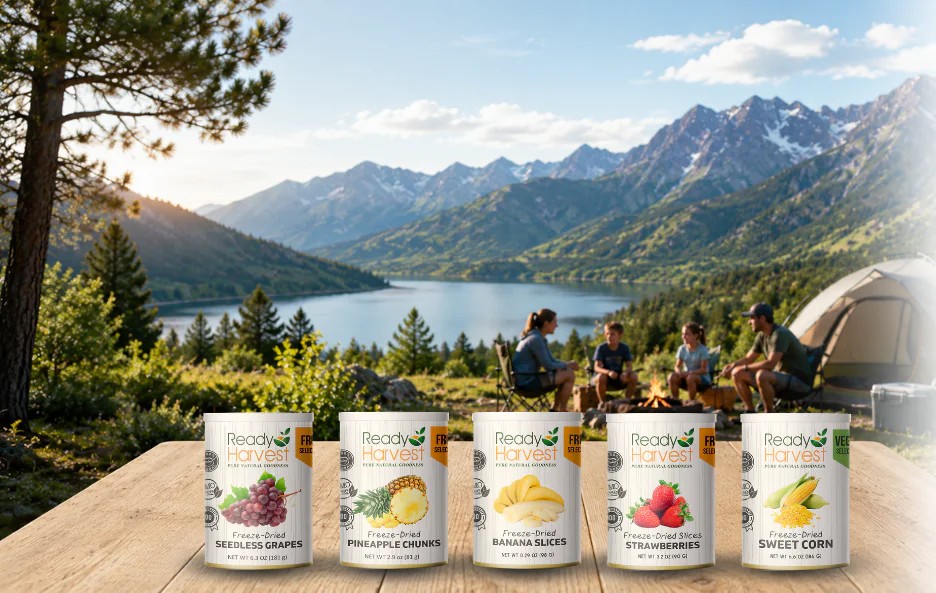
Tropical fruits are where the gap between brands narrows. Mango and pineapple are sweet, robust fruits that survive the freeze-drying process almost regardless of brand. Augason Farms #10 can mango is excellent and one of the best per-ounce values in the entire freeze-dried category. Mother Earth Products pineapple chunks are similarly good. Premium brands offer marginal flavor improvements but at much higher prices—not worth it for these fruits in our experience.
Bananas
Freeze-dried banana slices are the snack-food sleeper hit. They are crunchy, mildly sweet, and incredibly satisfying. Almost every brand makes a decent banana product because the fruit is so forgiving of process variation. Thrive Life and Augason Farms both make excellent banana slices at reasonable prices. Watch the sodium and added-sugar labels on some brands—a few add sugar coating, which we consider a defect for an inherently sweet product.
Apples
Apple slices are the workhorse fruit for baking and oatmeal. Harmony House sells excellent apple dices in bulk bags at very reasonable prices. Mother Earth Products and Augason Farms both make decent #10 can products. Thrivalist apple slices are noticeably better in flavor (real cinnamon-friendly apple character) but cost more.
Mixed Fruit Blends
Mixed-fruit pouches are convenient and usually represent decent value, but watch the ratios. Cheap blends are often mostly apple and banana with token amounts of strawberry and blueberry sprinkled on top. Thrivalist’s mixed blends tend to be better balanced, and Mountain House blends genuinely contain meaningful proportions of the premium fruits like strawberry and raspberry.
Where to Buy Freeze-Dried Fruit in 2026
Direct-from-manufacturer is almost always the best price for the major brands. Thrivalist’s online store ships fast and runs frequent bundle deals on fruit packs. Augason Farms is most consistently cheap on Amazon, where you can also catch frequent Lightning Deals on #10 cans. Mountain House and Mother Earth Products both sell direct and through REI for camping-focused pouches. Harmony House sells direct only and is one of the few brands focused on bulk bags rather than #10 cans, which makes them ideal if you cook from scratch and want to add fruit to oatmeal, baking, or smoothies.
Costco and Sam’s Club occasionally stock freeze-dried fruit bulk packs, usually under store-branded private labels that are typically packed by Augason Farms or Wise. The per-ounce price at warehouse clubs is often the cheapest option but selection is unpredictable.
How to Store Freeze-Dried Fruit
Sealed: keep #10 cans and unopened pouches in a cool, dry, dark place. The shelf-life claims of 25-30 years assume storage temperatures below 70°F. Every 10°F of temperature increase roughly halves shelf life, so a hot garage will dramatically shorten storage time.
Opened: freeze-dried fruit absorbs humidity from the air and softens within days if left in a regular kitchen. Use the included resealable pouches if available, or transfer to airtight glass jars or vacuum-sealed bags. We get 1-2 weeks of peak crispness from opened pouches in a dry climate, and as little as 3-5 days in humid climates. For #10 cans, transfer to smaller mason jars after opening rather than trying to keep the can sealed—the plastic lids that come with cans don’t seal well enough for long-term humidity protection.
Common Questions
Is freeze-dried fruit healthy? Yes—it retains roughly 97% of the original fruit’s nutrients including vitamins, minerals, and antioxidants. It does concentrate the natural sugars by removing water, so the per-piece calorie and sugar content is higher than fresh fruit, but per-gram nutrient density is essentially identical to the original.
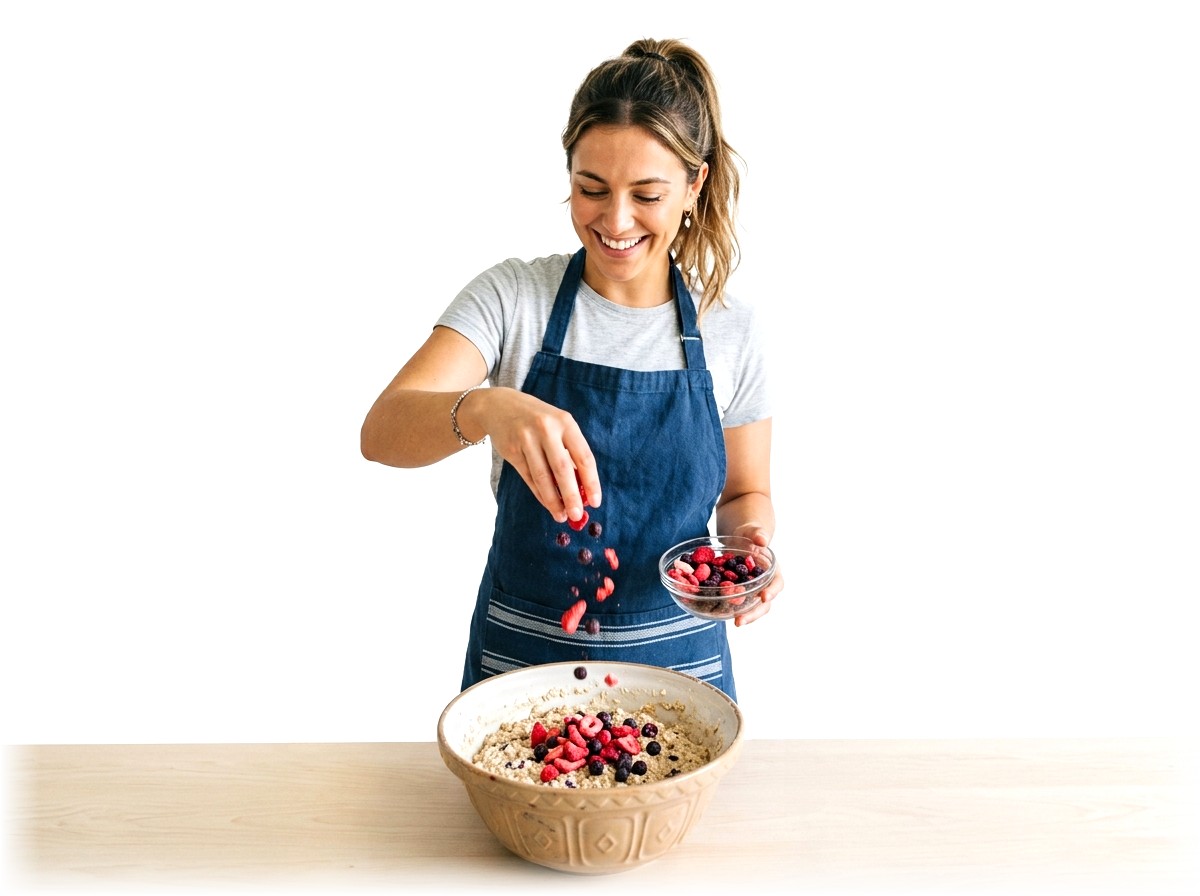
Can you eat freeze-dried fruit dry? Absolutely—most people prefer it that way. The crispy texture and intense flavor are the main appeals. You can also rehydrate with water for use in smoothies, oatmeal, or baking, and it returns to nearly the original texture in 30-60 seconds.
Does freeze-dried fruit have added sugar? Most major brands do not add sugar—the listed sugar content on nutrition labels is the natural sugar from the fruit itself, concentrated by water removal. A few brands add sugar coating to specific products (some banana chips, some mango), so always check the ingredient list. We avoid added-sugar versions of inherently sweet fruits.
Is freeze-dried fruit good for kids? It is one of the cleanest snack categories you can buy—no preservatives, no added oils, no salt, just fruit. The crispy texture is also a hit with kids who reject mushy foods. Just watch portion size; the calorie density per volume is much higher than fresh fruit because the water is gone.
The Bottom Line
If you are buying freeze-dried fruit for snacking and want the best flavor, start with Thrivalist or Mountain House strawberries and Thrivalist or Mother Earth Products blueberries. If you are stocking up for emergency storage or long-term pantry, Augason Farms #10 cans are the best per-ounce value and the quality is genuinely good. If you are baking or making smoothies regularly, Harmony House bulk bags are the most economical and ship fast.
The single biggest mistake we see new buyers make is buying the cheapest fruit they can find on Amazon and assuming all freeze-dried fruit tastes the same. It does not. The flavor difference between the best and worst products in a single category like strawberries is dramatic. Spend the extra dollar or two on the premium brands for the fruits you eat most often, and save the budget brands for the fruits where the gap is small (mango, pineapple, banana).