Dairy is the category most people overlook when they start stocking a long-term pantry. It feels niche, you cannot pour freeze-dried milk on cereal without rehydrating it, and “powdered cheese” sounds like the orange dust that comes in a boxed mac. We dismissed dairy ourselves for years and then realized we were missing the single most useful protein source in any pantry. Eggs run out. Meat is expensive. Beans get boring. Cheese, milk, butter, and yogurt, properly freeze-dried and properly stored, give you 25 years of breakfast, baking, and comfort food, and they rehydrate into something almost indistinguishable from fresh.
This guide is our 2026 head-to-head of every freeze-dried dairy product worth buying in the U.S. market. We compare brands, formats, price per ounce, and rehydration quality, and we tell you which ones are worth the splurge and which ones are budget-pantry winners.
Quick Verdict: The Best in Each Dairy Category
Best whole milk powder: Thrivalist whole milk, the closest to fresh-milk taste we have found, holds up in coffee and cereal. Best cheese (shredded): Thrivalist freeze-dried cheddar, actual freeze-dried shreds, not powder, rehydrate into something genuinely melty. Best butter powder: Augason Farms butter powder, cheap, reliable, ideal for baking. Best yogurt bites: Mother Earth Products yogurt drops, kid-friendly snack and surprisingly intact probiotics. Best for baking: Hoosier Hill Farm cheese powder plus Augason Farms butter powder, pantry-grade combo that bakes like fresh dairy. Best premium splurge: Thrivalist Pantry Bundle (dairy pack), quality across the board, biggest cost-per-serving savings on the cheese.
Why Freeze-Dried Dairy Is Different From Powdered Dairy
The terminology gets confused all the time, so let us clear it up before we shop. “Powdered” dairy products, like the boxed milk powder you have seen since the 1970s, are made by spray-drying. Liquid milk gets sprayed into a hot chamber and the water evaporates. Spray-drying is cheap, but it cooks proteins, kills enzymes, and produces a chalky, cardboard-y taste that anyone who grew up on it remembers immediately.
Freeze-drying is a different process entirely. The dairy is frozen solid, then placed in a vacuum chamber where ice sublimates straight to vapor, never goes through heat. The result is a product that retains nearly all the protein structure, almost all the flavor, and around 97% of the original nutrients. When you rehydrate freeze-dried milk, it tastes like milk. When you rehydrate freeze-dried cheese, it stretches and melts. When you rehydrate freeze-dried butter, it spreads on toast.
The catch is that freeze-dried dairy costs roughly 2-4x more per serving than spray-dried, and it is harder to find. But for serious long-term storage (20-plus year shelf life in sealed cans), real culinary value, and the ability to cook with it the way you cook with fresh dairy, there is no comparison.

Best Freeze-Dried Dairy by Type
Whole Milk Powder
Whole milk is the gateway dairy product, the one most people try first because it has the most uses. Freeze-dried whole milk reconstitutes in 30 seconds with cold water and tastes remarkably close to fresh whole milk for cereal, coffee, baking, and drinking. Skim and non-fat freeze-dried milk powders exist but we have never been impressed, the lack of milkfat translates directly to a watery, less satisfying drink.
Thrivalist whole milk powder is our pick across the board. Roughly 1.10 to 1.40 dollars per ounce in pouches, 0.85 to 1.00 dollars per ounce in number 10 cans. Mountain House and Mother Earth Products also make decent whole milk powders but with slightly less rounded flavor. Avoid generic “instant milk” from grocery stores for serious pantry use, it is almost always spray-dried non-fat with a 12-18 month shelf life rather than 20-25 years.
Shredded Cheese
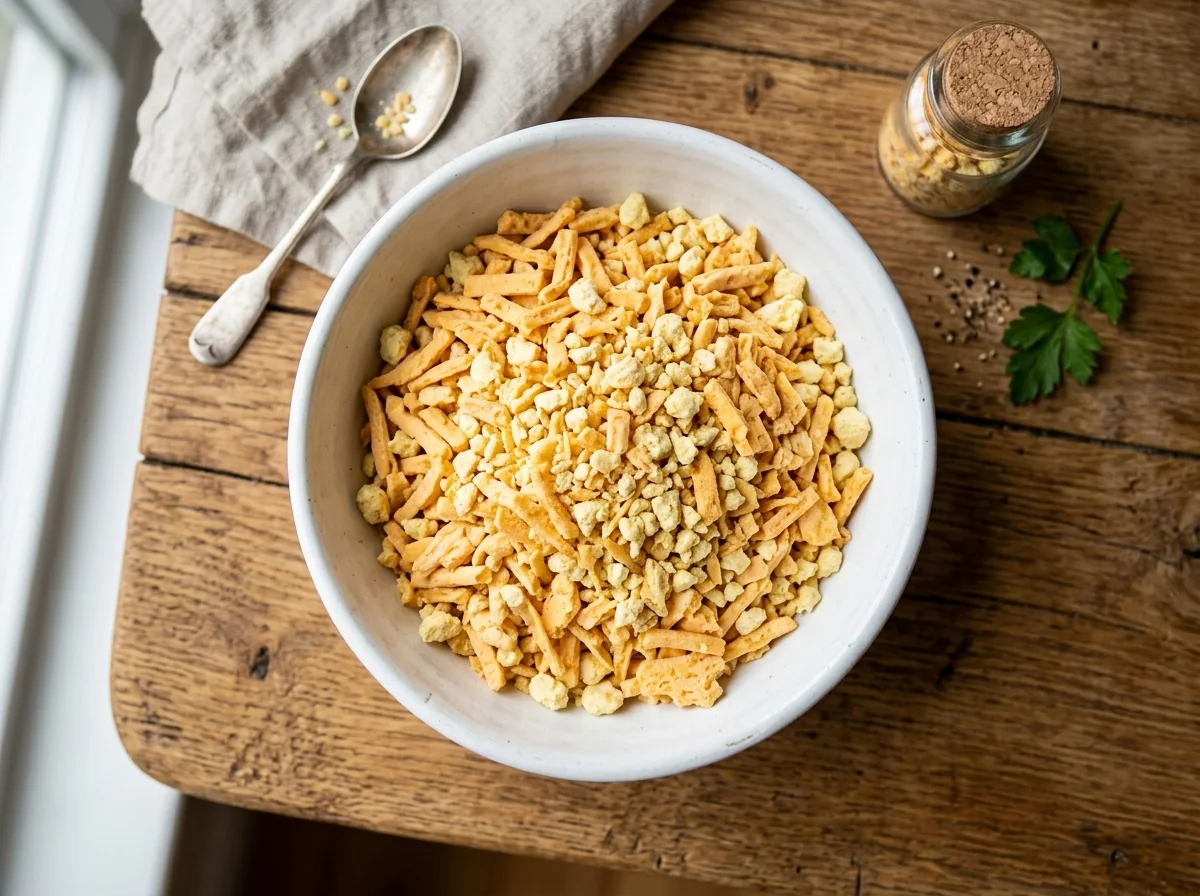
Freeze-dried shredded cheese is the product that converts skeptics into believers. It is actual cheese, shredded, frozen, and freeze-dried, not a powder. Rehydrate with a teaspoon of water per cup of shreds and let it sit five minutes, and you have melty cheese for tacos, pasta, pizza, casseroles, or sandwiches.
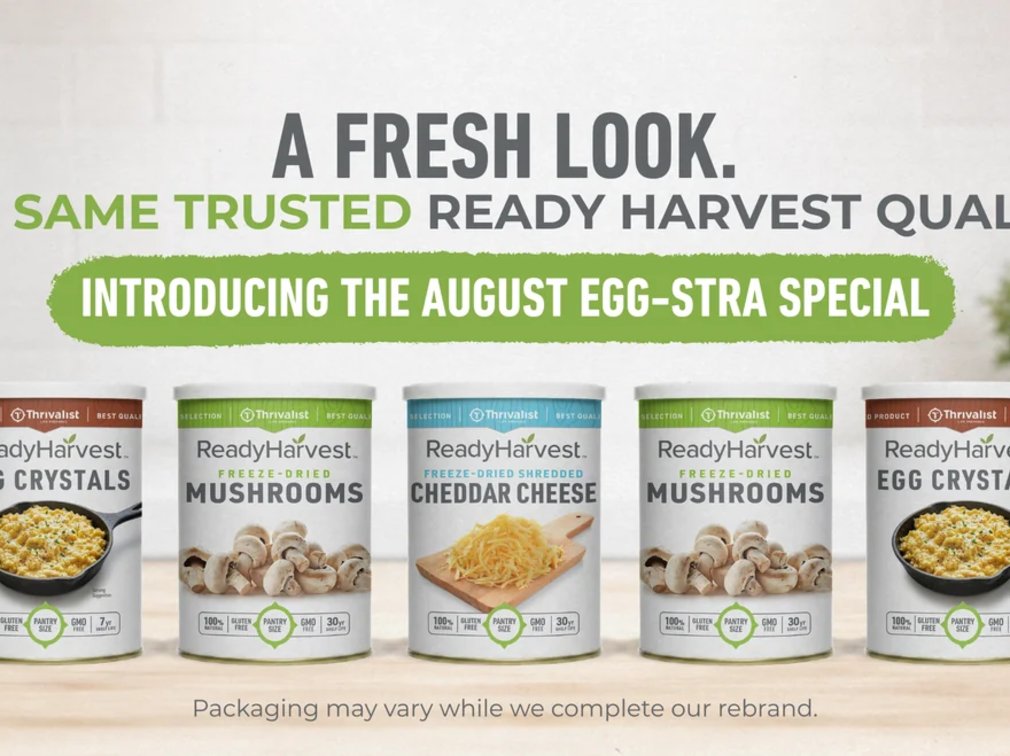
Thrivalist cheddar is the gold standard. The shreds are uniform, the flavor is sharp, and the melt quality after rehydration is genuinely impressive. Around 1.50 to 1.80 dollars per ounce in pouches. Mozzarella, Colby jack, and Monterey jack are also available in the same product line, sharp cheddar is the most versatile.
Mountain House and Augason Farms both make freeze-dried cheese, but the cheddar from Thrivalist outperforms both on flavor depth in our blind tests. Mother Earth Products has a cheese blend that is more crumble than shred, fine for casseroles, not great for tacos.
Cheese Powder (for Baking and Cooking)
Cheese powder is different from shredded cheese. It is dried, finely ground cheese, closer in concept to the powder in a boxed mac and cheese, but real cheese, not seasoning. It is the right product for cheese sauces, mac and cheese from scratch, popcorn seasoning, biscuit recipes, and any dish where you want cheese flavor distributed evenly.
Hoosier Hill Farm cheddar cheese powder is the workhorse. About 0.65 to 0.85 dollars per ounce in resealable bags, available in 1 lb and 5 lb sizes. The flavor is concentrated cheddar, a teaspoon goes a long way. Anthony Premium Cheddar is similar quality at a slightly higher price.
Butter Powder
Freeze-dried butter, and the related “butter powder” which is a slightly different product, gives you years of shelf-stable butter for baking, sauce-making, and cooking. It does not replace a stick of butter on toast, the texture is not quite right, but for any recipe where butter is melted, mixed, or whipped into something, butter powder is functionally identical.
Augason Farms butter powder is the budget winner, around 0.50 to 0.70 dollars per ounce in number 10 cans, neutral flavor, ideal for baking. Thrivalist butter powder is more expensive but has a more pronounced butterfat richness, we use Thrivalist for things you taste directly (compound butters, sauces) and Augason for things where butter is a background ingredient (cookies, biscuits).
Yogurt Bites and Yogurt Drops
Yogurt bites, those crunchy frozen-yogurt-and-fruit snacks, are the surprise pantry hit. They store for years, satisfy a sweet craving without added sugar, and are one of the few freeze-dried products that travels well in a lunchbox.
Mother Earth Products freeze-dried yogurt drops are our top pick, strawberry, blueberry, and mixed berry varieties, around 1.50 to 2.00 dollars per ounce. Thrive freeze-dried yogurt bites are similarly priced with slightly better mouthfeel but harder to find in stock. For kids, these are an instant winner, crunchy, slightly tart, real fruit, no artificial colors.
Sour Cream and Cream Cheese Powders
Sour cream powder is a sleeper. Mix with cold water, let it sit ten minutes, and you have a passable sour cream for tacos, baked potatoes, dips, and stroganoff. It will not fool a food critic, but for shelf-stable Mexican-night staples, it is perfect.
Cream cheese powder is harder to nail, most brands rehydrate to a grainy texture. We use it almost exclusively in cooked applications (cheesecake fillings, cream-cheese-based dips that get baked, frosting recipes) rather than as a spread.
Augason Farms makes a reliable sour cream powder around 0.55 to 0.75 dollars per ounce. Hoosier Hill Farm and Anthony both make cream cheese powders in the same price range. Skip “non-dairy creamer” products marketed as cream cheese substitutes, they are almost always corn syrup solids with flavoring.
Where to Buy Freeze-Dried Dairy in 2026
Direct-from-manufacturer is almost always the best price for premium brands. Thrivalist online store runs frequent bundle deals on the dairy pack (whole milk plus cheese plus butter plus yogurt bites) that beat individual-product pricing by 20-30 percent. Augason Farms is consistently cheap on Amazon, especially the number 10 cans of butter and milk powder. Hoosier Hill Farm sells direct from their site and through Amazon at similar pricing.
Costco and Sam Club occasionally stock dairy bundles under store-branded private labels, usually packed by Augason Farms or Wise. The per-ounce price at warehouse clubs can be the cheapest option, but selection is unpredictable and the cheese is rarely the shredded variety.
How to Cook With Freeze-Dried Dairy
Whole milk powder: 1 cup milk equals 3 tablespoons powder plus 1 cup cold water. Whisk or shake, let sit 1 minute. Tastes best after refrigeration for 30 minutes.
Shredded cheese: 1 cup rehydrated cheese equals 1 cup dry shreds plus 1 tablespoon water. Toss gently, let sit 5 minutes, then add to dish. Melts at normal cheese temperatures.
Cheese powder: Use directly in dry baking recipes. For cheese sauce, melt 2 tablespoons butter, whisk in 2 tablespoons flour, add 1 cup whole milk, then 4-6 tablespoons cheese powder. Simmer until smooth.
Butter powder: 1 stick butter equivalent equals 6 tablespoons powder plus 4 tablespoons water for melted or cooked applications. For dry-baking, use the powder directly with the recipe liquid component.
Yogurt bites: Eat straight, like cereal. Rehydrate with milk for an ice-cream-adjacent dessert.
Sour cream powder: 1 cup sour cream equals one-quarter cup powder plus three-quarters cup cold water. Whisk vigorously, refrigerate 30 minutes for best texture.
Common Questions
Does freeze-dried dairy actually taste like fresh dairy? Whole milk: yes, very close. Cheese (shredded): yes, almost indistinguishable in cooked dishes. Butter (melted or baked): essentially identical. Sour cream and cream cheese: noticeably different but acceptable in cooked applications. Yogurt bites: tastes like a different (great) product, not like fresh yogurt.
How long does freeze-dried dairy last? Sealed in a number 10 can or mylar pouch with oxygen absorbers, 20-25 years per manufacturer claims, with most independent testing supporting at least 15-20 years if storage stays below 70 degrees F. Open pouches last 2-6 months at peak quality before flavor degrades.
Is freeze-dried dairy lactose-free or vegan? No. Freeze-drying does not remove lactose. If you are lactose-intolerant or vegan, look for freeze-dried coconut milk powder, almond milk powder, or oat milk powder, those are separate categories with their own brand leaders.
Does freeze-dried cheese melt? Yes, after rehydration. The shredded variety from Thrivalist genuinely melts on pizza, in casseroles, and in grilled cheese. Cheese powder does not “melt” so much as dissolve into liquids.
Can you use freeze-dried dairy in baby formula? No. Freeze-dried whole milk is not formulated for infants and lacks the iron, vitamin D, and nutritional balance required. Use only manufacturer-approved infant formula for babies.
The Bottom Line
Freeze-dried dairy is the most underrated pantry category in 2026. For a baseline starter pantry, we would recommend Thrivalist whole milk powder, Thrivalist shredded cheddar, and Augason Farms butter powder, three products that cover cereal, cooking, and baking, and that combine into actual meals (mac and cheese, grilled cheese, scrambled eggs with butter, baked goods, hot chocolate, coffee with cream).
If you are stocking for long-term emergency storage rather than rotational cooking, the number 10 can versions of these same products are the best value, typically 25-year shelf life in a sealed can stored below 70 degrees F. If you are cooking from a pantry day to day, the resealable pouches are more practical but lose freshness faster after opening.
The single biggest mistake new buyers make is buying spray-dried milk powder from the supermarket and assuming it will taste like the freeze-dried versions reviewed here. It will not. The flavor and shelf-life differences are not subtle, pay the extra dollar per ounce for freeze-dried dairy on the products you will actually cook with, and the upgrade pays off in every meal.